


Education Centre Web Tour - History
The First Cats and Evolution of the Cheetah
Fossil records date the first appearance of cat-like ancestors, known as Proailurus, at more than 30 million years ago. A division occurred in the cat lineage 26 million years ago (the Miocene Period). The sabre-toothed cats developed along one line while "true" cat ancestors developed along another path. The cheetah developed along the "true" cat line.
Studies conclude that cheetah ancestors originated in North America about 4 million years ago during the Pliocene period (5.2 to 1.6 million years ago). This cheetah relative, Miracinonyx, appears to be a common ancestor of both the cheetah and the puma (cougar). During the Ice Age Miracinonyx migrated across continents. Its descendants developed the characteristics that make the cheetah the unique animal that it is today. Two relatives, Acinonyx studeri and Acinonyx trumani, ranged in North America.
The Giant Cheetah, Acinonyx pardensis, roamed China, southern Europe and India in large numbers throughout the Ice Age. It is believed that this large carnivore was as big as a lion and ran at speeds as fast as the modern day cheetah. Additional Acinonyx species developed during this time as well.
1.1 million years ago, during the Pleistocene Period, (1.6 million to 10,000 years ago) intermediate-sized cheetahs, Acinonyx intermedius, ranged from Africa as Far East as China. Cheetahs hunted prey in the open plains as grasslands replaced forests during this time period. The sleek characteristics of the modern cheetahs became more prominent. This was especially evident in reduced body size and elongated limbs.
The cheetah of 200,000 years ago closely resembled the modern cheetah, Acinonyx jubatus. It was smaller in size than the intermediate cheetah. The largest populations lived in savannah and grassland areas of Africa and the Middle East, but small numbers ranged in Europe, India and China.
Genetic Bottleneck
Cheetah relatives had worldwide distribution until about 20,000 years ago. They were common throughout Africa, Asia, Europe and North America. The world's environment underwent drastic changes in climate during the Great Ice Age.
Throughout North America, Europe and Asia, 75% of the mammal species vanished. When some mammal species began to die out, so did all the cheetahs in North America and Europe and most of those in Asia and Africa. Only a handful of the modern cheetah, Acinonyx jubatus, remained. These animals are the ancestors of all cheetahs remaining today.
This resulted in what is called a genetic bottleneck. Cheetahs became inbred, meaning that all cheetahs are closely related.
Cheetah and Man
The cheetah was important to many cultures. Traditional African healers and witch doctors used cheetah foot bones in spiritualistic rituals to symbolize fleet-footedness and speed. They used bones from a wide variety of animals and techniques varied from tribe to tribe. Objects represented a person, thing or mood from the past, present or future, and are known as divinatory sets.
The San of Southern Africa ate cheetah meat as a symbol for speed, but it was not a main food in their diet.
During the time of the Egyptian Pharaohs, the cheetah was considered a goddess named "Mafdet". Pharaohs kept cheetahs as close companions, symbolic of Mafdet's protection of the royal throne.
Kings wore cheetah skins for dignity. Trade in cheetah skins only started after European explorers began requesting them.
Cheetah and Art
Sumerians (Iraqi ancestors) were the first to use cheetahs in art. The cheetah and leopard have often been mistaken for each other. Cheetahs in early art were frequently called "panther" or "hunting leopard". Early artists called the true leopard "pardus" and described it as a cross between a cheetah (panther) and a lion (leo).
Middle Age and Renaissance artists began drawing cheetahs and other animals more life-like. During this time of scientific exploration, detailed descriptions of animals provided incentive for reality in art. Artists included cheetahs more often in their paintings as the trade in live animals increased.
Artists always pictured cheetahs as animals of speed and royalty.
The Hunting Leopard
In C1700 BC, the Egyptians were the first to tame cheetahs. They admired the cheetah for its speed, hunting ability and beauty. They honoured cheetahs as symbols of royalty and prestige. The swiftest animal on earth became a cherished hunting companion of Pharaohs and royalty throughout Europe, Asia and India. Until the early 1900's, ownership of cheetahs was as important to these nobles as their love for gold. Cheetahs hunt by sight so they excelled in the sport known as "coursing". Hunts organised by royalty and nobles were for the challenge of sport, not for food. Hunts represented power and prestige.
By the 1500's the popularity of the cheetah as a hunting companion rivalled that of the dog. Cheetahs, the most easily tamed of the big cats, were caught, tamed and trained. Adults were used because cubs had not learned how to hunt. Tamed cheetahs formed a strong bond with their keepers.
Each cheetah rode to the hunt by horseback or on a cart. Its eyes were covered with a hood and uncovered when prey was sighted. The cat was released to chase down the prey then rewarded with meat fed from a wooden spoon.
Although cherished, pampered cheetahs were loved to near extinction and taken from the wild in great numbers. By the early 1900's, India and Iran were importing African cheetahs for the sport of "coursing", as their own wild populations became too small.
The Road to Extinction?
Through the 1900's, world development, industrialisation, automobiles, aeroplanes and man's inventions seemed limitless, yet there is nothing man-made that rivals the speed and efficiency of the cheetah.
Scientists classified the cheetah as Acinonyx jubatus, yet nobles still referred to it as the "hunting leopard". By the end of the 1800's, cheetahs were a rarity in Asia Minor and Arabia because of their use in the sport of "coursing".
Although it appeared that the cheetahs had a large range, their numbers within that range existed in small pockets. Cheetahs, farmers and their livestock all preferred open grasslands for their habitat. Increasing agricultural development and new settlements played havoc with remaining cheetah populations.
Where Did the Cheetah Go?
As human populations grew in the 1970's, the amount of land devoted to livestock farming steadily increased. Livestock filled the open land where cheetahs roamed. Natural prey became scarce. Farmers killed other large predators. Although game reserves protected them, cheetahs could not compete against hyenas and lions. Farmlands offered cheetahs a safe haven, but they sometimes killed livestock.
Farmers saw cheetahs more frequently and thought their numbers had increased. Cheetahs took the blame for most predator-related livestock losses. Farmers killed cheetahs by the thousands as pests or to sell their skins to the fur trade.
By 1975, researchers realized that the cheetah was in trouble. CITES (Convention on International Trade of Endangered Species) placed the cheetah on Appendix I, making international trade in live cheetah or cheetah products illegal. Local laws supported CITES in many countries where cheetahs still lived. Researchers began looking for ways to encourage the growth of cheetah populations through land management practices.
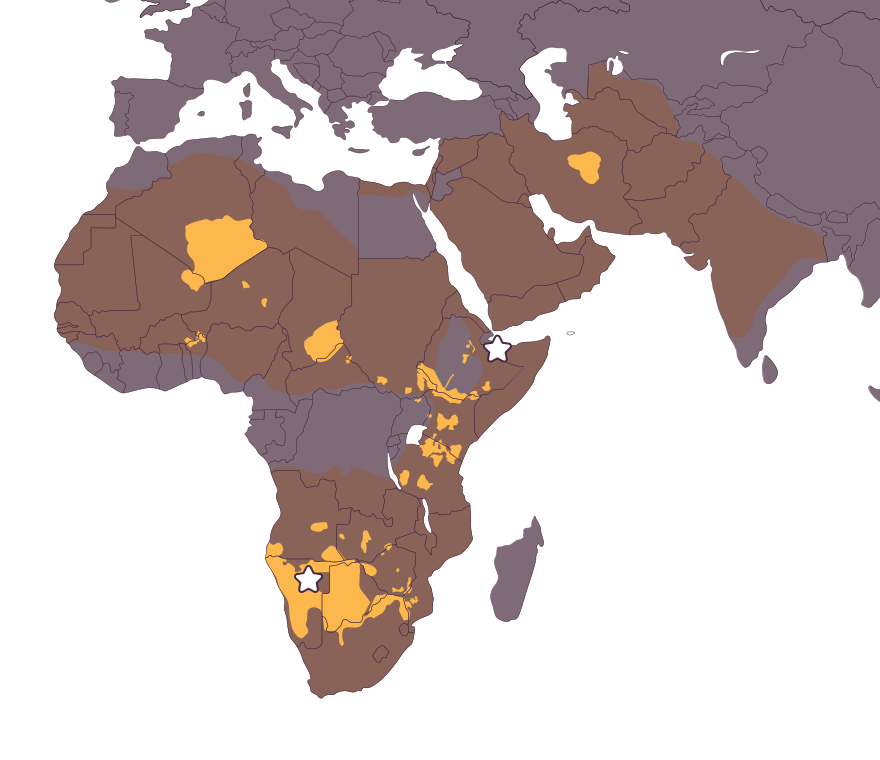
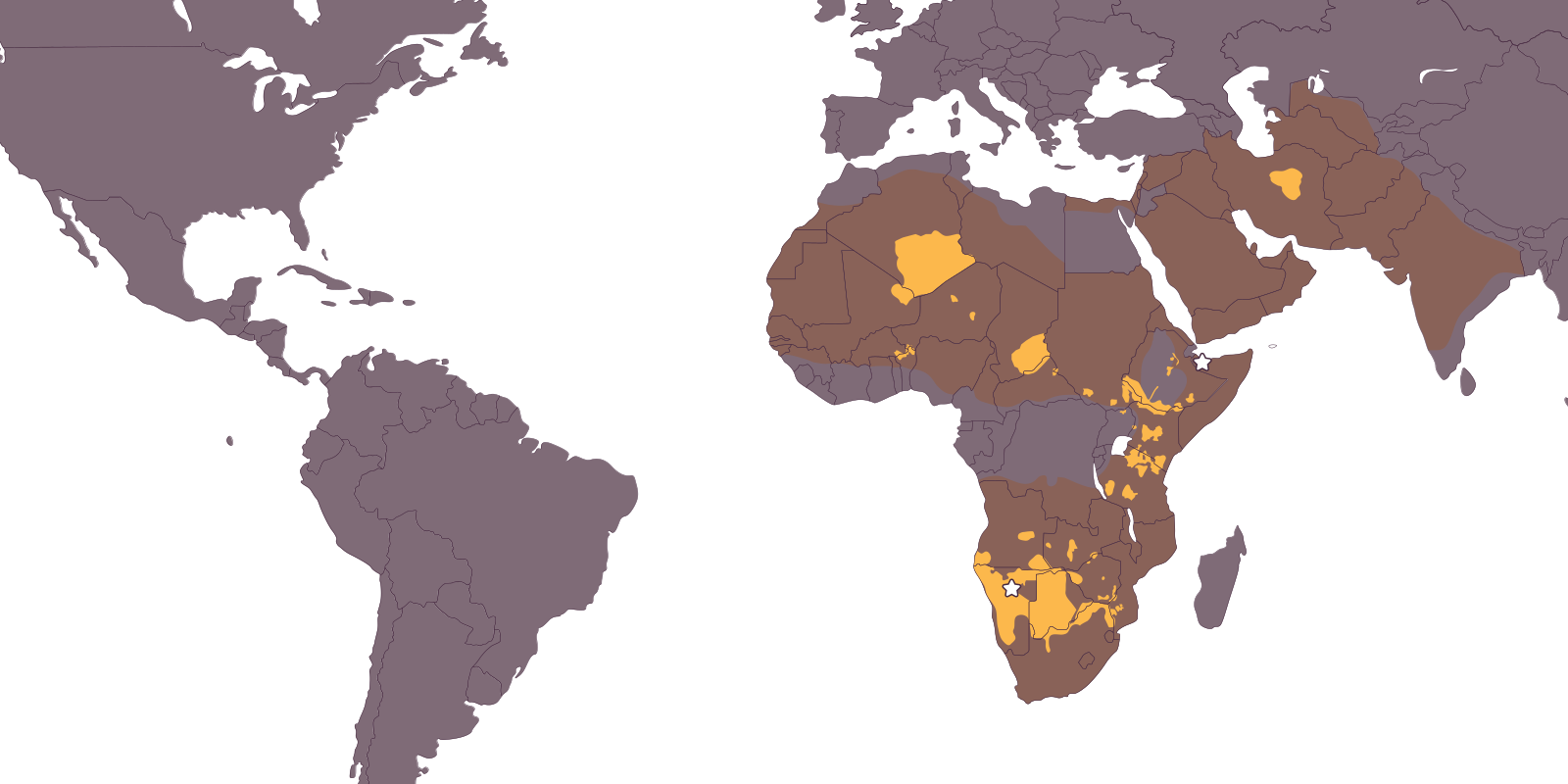
In the 1980's cheetah numbers declined by half. Each year farmers removed 700 - 800 cheetahs from the wild. Southern Africa still holds two-thirds of the world's remaining wild cheetahs. Cheetah population size in many regions may be too small to be viable for survival.
Cheetah Numbers Plummet!
It took 4,000,000 years for the cheetah to evolve into the unique animal it is today. It has taken less than 100 years for man to place it on the endangered species list. In 1900 there were 100,000 cheetahs in 33 African countries and 11 Asian countries. In 1975 there were 30,000 cheetahs in Africa and only 200 survived in Iran. In 2000 only 12,500 cheetahs lived in 26 African countries. Only 100 survived in Iran. In one century man has reduced the cheetah population to less than 13% of its original population.
Namibia - Cheetah Capital of the World
Namibia has the world's largest cheetah population. Approximately 3,000 cheetahs share the land with humans, livestock and wildlife.
Today, the status of the Namibian cheetah is stabilising. During the 1980's, the population of Namibian cheetahs declined by half. In this 10-year period, nearly 7,000 cheetahs were removed from the wild.
In most countries where cheetahs live, their numbers have been reduced to critical levels. The cheetah's survival worldwide is in human hands.
Namibia - Hope for the Future
The greatest hope for the cheetah's survival lies in the relatively pristine countryside of Namibia. Nearly 1,000 Namibian farmers control the fate of the country's cheetahs on whose land they live.
To survive, cheetahs need land and prey. A cheetah's home range covers several thousand hectares. Cheetahs prefer to eat wild game meat. When game numbers drop the cheetah is forced to hunt domestic livestock.