



Race For Survival

Cheetahs have existed on earth for at least three-and-a-half to four million years- long before any of the other big cats that are alive today. About 20,000 years ago, cheetahs were common throughout Africa, Asia, Europe, and North America. Through the dating of fossil remains, it appears that the cheetah originated in the United States of America in the present-day states of Nevada, Texas, and Wyoming.

Approximately 10,000 years ago, at the end of a time called the Pleistocene Epoch also known as the Great Ice Age (a geographical time period from approximately 2 million to 10,000 years ago), the world's environment underwent drastic changes in climate. Over a few thousand years, 75 percent of the mammal species in North America, and Europe died.

When mammals began to die, so did all the cheetahs in North America and Europe and most of those in Asia and Africa. Cheetahs may have migrated to more suitable environment as ice covered a large part of the northern hemisphere and sea levels fell.

The cheetah survived the mass extinction of the Pleistocene Epoch, but its numbers were greatly reduced. Brothers were left to reproduce with sisters and parents with siblings, which led to the founding of the next generation, and inbreeding took place. This occurrence - a severe reduction in population - is called a "bottleneck." Every cheetah alive today appears to be so inbred that genetically they are as closely related as twins (two offspring, or individuals born at the same birth).

Cheetahs have been kept in captivity since 3,000 BC when Sumerians, people who lived in present-day Iraq, began taming cheetahs for pets. In Egypt, during the time of the pharaohs, the cheetah was considered a goddess named "Mafdet." Pharaohs kept cheetahs as close companions, which symbolized protection by Mafdet. Symbols of the cheetah are found on ritual and magic knives, statues, and in paintings on royal tombs. The ancient Egyptians believed that the cheetah would carry the Pharaoh's soul to the afterworld. The cheetah was admired for its speed, hunting ability, and beauty, and was honored as a symbol of royalty and prestige.

As early as the fifth century, cheetahs were used by Italian nobles to hunt for sport. Adult cheetahs were caught in the wild, and tamed within a few months of capture. With their heads covered by a hood so they could not see the prey, cheetahs were led to the hunting area on a leash, in a cart, or on the back of a horse, sitting on a pillow behind the rider. The cheetah was taken near the prey, and the hood was removed. It then sprinted after the prey, and after catching it, the trainer rewarded the cheetah with a piece of meat. Cheetahs were commonly known as "hunting leopards," as people often confused the cheetah and the leopard, considering them the same species. The use of this term may account for some of the confusion between the differences in the two cats - the cheetah and the leopard are two distinct species.

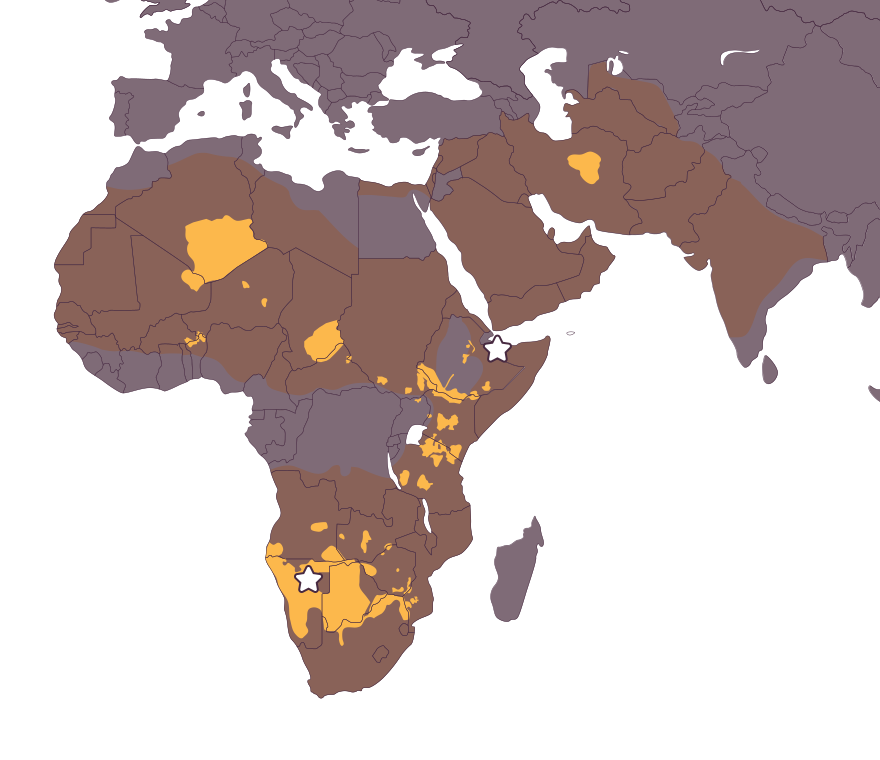
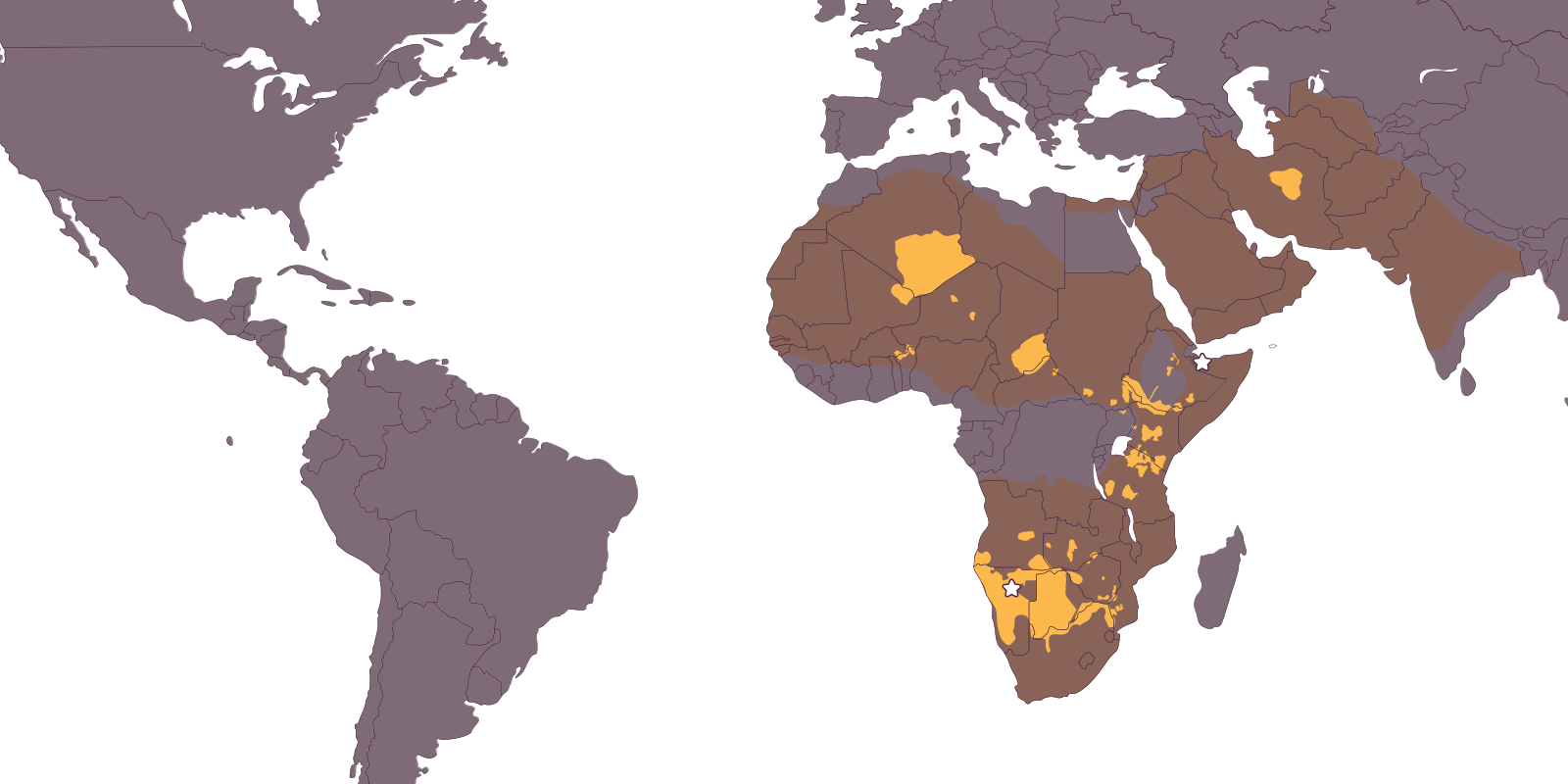
Russian princes in the 11th and 12th centuries also hunted with cheetahs. During the Renaissance (the time period from the 14th through the 16th centuries), every Italian family of nobility and many French nobles kept cheetahs for hunting. The crusaders observed cheetahs being used to hunt gazelles in Syria and Palestine during this time. Marco Polo, the famous Italian explorer, brought back accounts of the hundreds of cheetahs kept by Kublai Khan, the Founder of the Mongol dynasty in China, during the 13th century. Akbar, a Mughal ruler of the 16th century (India), was said to have owned 9,000 cheetahs during his 49-year reign. He kept detailed records of his collection, which showed the birth of only one litter. Unfortunately, cheetahs do not reproduce well in captivity, and cubs suffer high mortality - none of Akbar's cubs lived. It was not until 1956, that the first cheetahs were born and raised in captivity. Because of the continuous wild capture of the Asian species of cheetahs for royalty and their failure to breed in captivity, the Asiatic cheetahs were sharply reduced, and cheetahs had to be exported from Africa to supply hunting cheetahs at Court. In India, the cheetah was considered a prerequisite for royalty - in 1952 it was declared extinct. The Asian cheetah, which was distributed widely throughout the continent in eleven countries, is now nearly extinct. Today only 200 cheetahs are found in Asia, in the country of Iran.

The number of cheetahs has decreased from 100,000 at end of the 19th century to approximately 10,000 today. The cheetah has suffered from inbreeding, high infant mortality, loss of habitat, a reduction in its prey base, conflicts with livestock farming, and a reduced ability to survive in parks and reserves due to the presence of larger predators. Yet, despite all these problems, the cheetah is the oldest of the big cats, and has survived the longest. If we can provide a habitat and a rich prey-base for cheetahs on the livestock farmlands of southern Africa, the cheetah's race will be one of survival, not extinction.

Cheetah Range Map 2007
Present population of cheetahs worldwide: ~10,000