Community Outreach

Land use changes and an increase in human population and activity levels through out Kenya affect land use by wildlife. While pocketed populations of game are still strong on large commercial farms and on unsettled public land, these populations are changing over time. Subdivision of land, disease, human-wildlife conflict and poaching has reduced prey base throughout unmanaged ranchland. Livestock loss to cheetah is typically viewed as a minimal threat compared to that of lion, leopard, jackal and hyena.

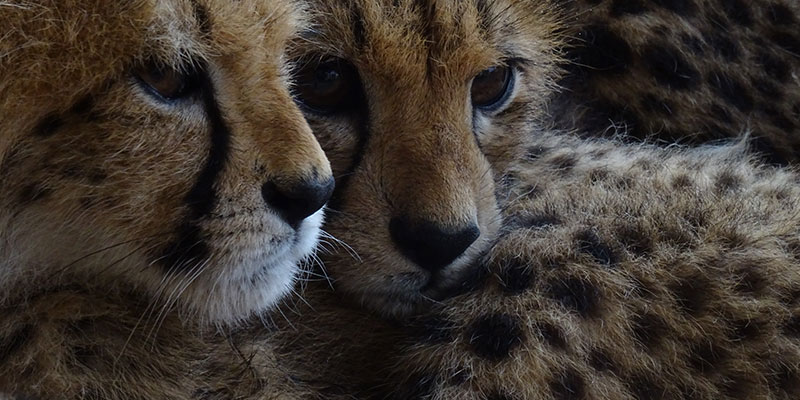
The case study in the Kiu region of the MWF allows the opportunity to identify the pattern of cheetah movement and livestock losses due cheetahs in the region that have been opportunistically killing goats and sheep since August 2002. This problem provides CCFK with the opportunity to involve community members in research and awareness of cheetah.

Mobility in the Community

In 2006, the Cleveland Metroparks Zoo donated funds for the purchase and insurance on a motorcycle for Cheetah Conservation Fund community work in Kenya.

(photo - right) In 2006, the Cleveland Metroparks Zoo donated funds for the purchase and insurance on a motorcycle for CCF's community work in Kenya. 

The Kinetic BOSS (100) has been the main transport for CCF Kenya Community Liaison officer Lumumba Mutiso. Livestock loss reports, cheetah sighting reports and interaction with the community has been dramatically enhanced with the use of the motorcycle. While some of the roads in the region have been washed by recent rains and are impassable for the 4-wheel drive vehicle, the motorcycle can still pass. Work within the community of Kiu in the southern section of the Machakos Wildlife Forum, 120 km southeast of Nairobi, includes monitoring of the 9-20 cheetahs, which move in and around a subdivided region of about 2000 square kilometres. 

Livestock losses in the area occur at least monthly, with cheetah, leopard and hyena being the main predator causes. Disease and theft cause more livestock losses in a month than what is lost to predators in a year.  

In order to better understand livestock husbandry issues, the reconstruction of livestock dips aims to improve livestock health while providing CCF Kenya with a stable location for collection and distribution of information. The dips are operated by community groups and contain a chemical that protects the livestock from ticks. Since ticks carry diseases this is a means of improving livestock health.

Lumumba assists CCF with organizing workshops, which aim to assist the community in understanding livestock care and health. A student with one of the local universities will collect data on livestock health and related husbandry issues. This project is a direct result of Lumumba's mobility in the community.