General Information About the Cheetah


Cheetah migration in prehistory

Status Protected species in Namibia - considered vulnerable. Endangered under the United States Endangered Species Act. List on CITES Appendix I. First listed on 1 July 1975.
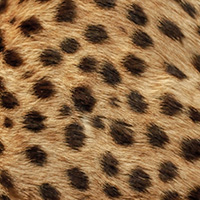
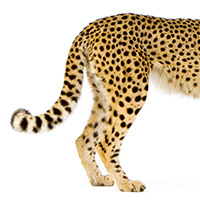
Description The cheetah has a slender, long-legged body with blunt semi-retractile claws. Its coat is tan with small, round, black spots, and the fur is coarse and short. The cheetah has a small head with high-set eyes. Black "tear marks," which run from the inside corner of its eyes down the sides of the nose to the outside of its mouth, keep the sun out of its eyes, and aid in hunting.
Size Adult body length 105-152 cm; tail length 51-87 cm; shoulder height 62-86 cm; weight 31-64kg. The male is slightly larger than the female.
Specializations The cheetah's flexible spine, oversized liver, enlarged heart, wide nostrils, increased lung capacity, and thin muscular body make this cat the swiftest hunter in Africa. Covering 7-8 meters in a stride, with only one foot touching the ground at a time, the cheetah can reach a speed of 110 km/h in seconds. At two points in the stride, no feet touch the ground.
Habitat Cheetahs thrive in areas with vast expanses of land where prey is abundant. In Namibia cheetahs have been found in a variety of habitats, including grasslands, savannahs, dense vegetation, and mountainous terrain. Ninety-five percent of the Namibian population lives on commercial farms.
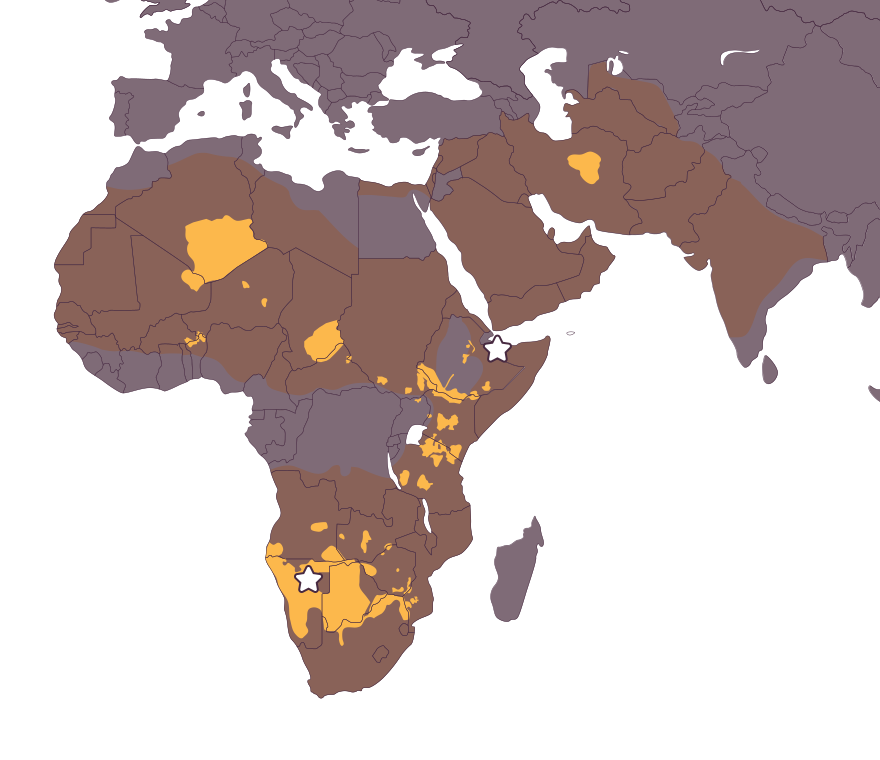
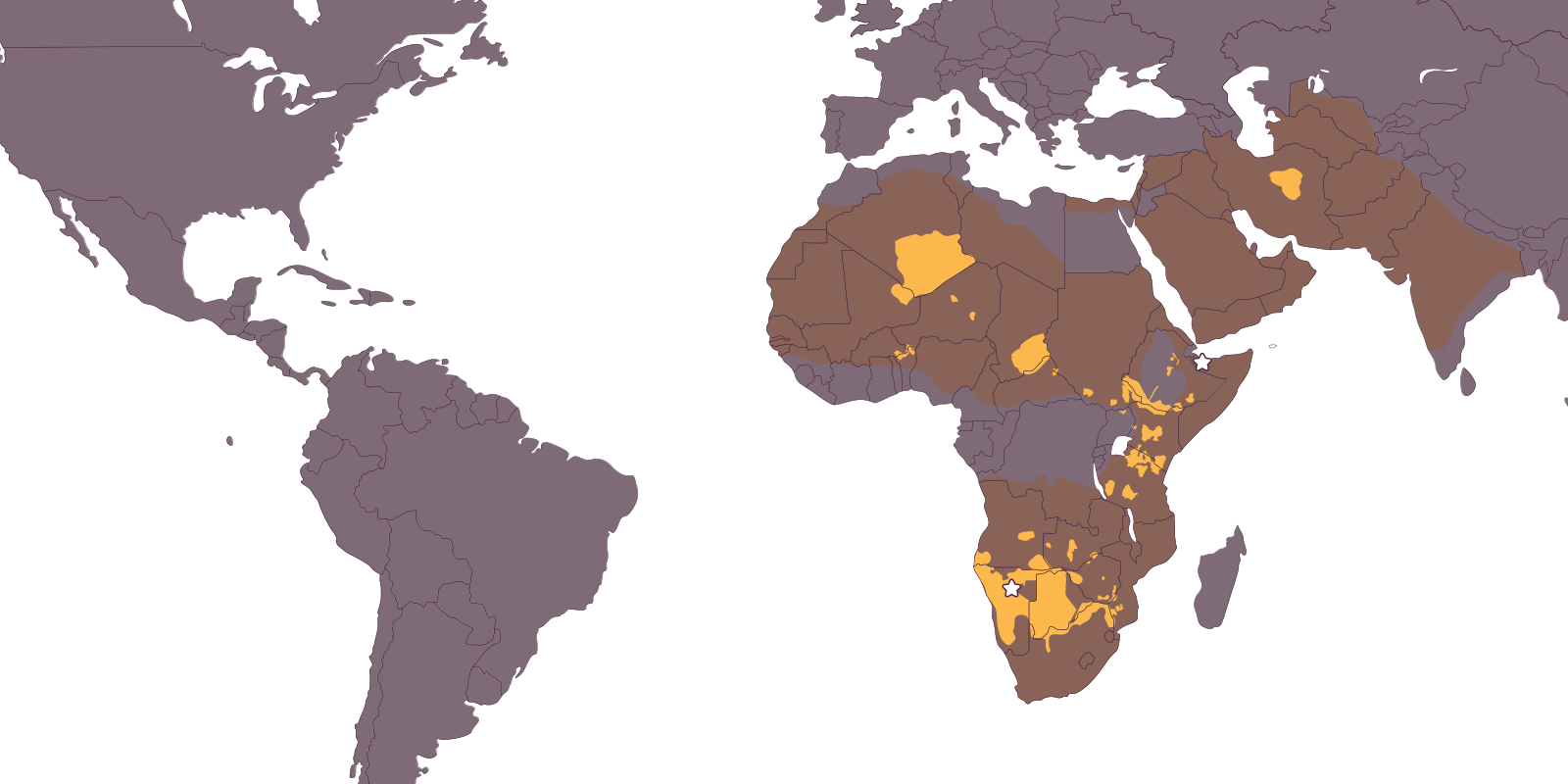
Range Once found throughout Asia and Africa, the species is now only scattered in Iran and roughly 26 countries in Africa. Home ranges for males in Namibia are 2,234 square km and 3,809 square km on average for females.
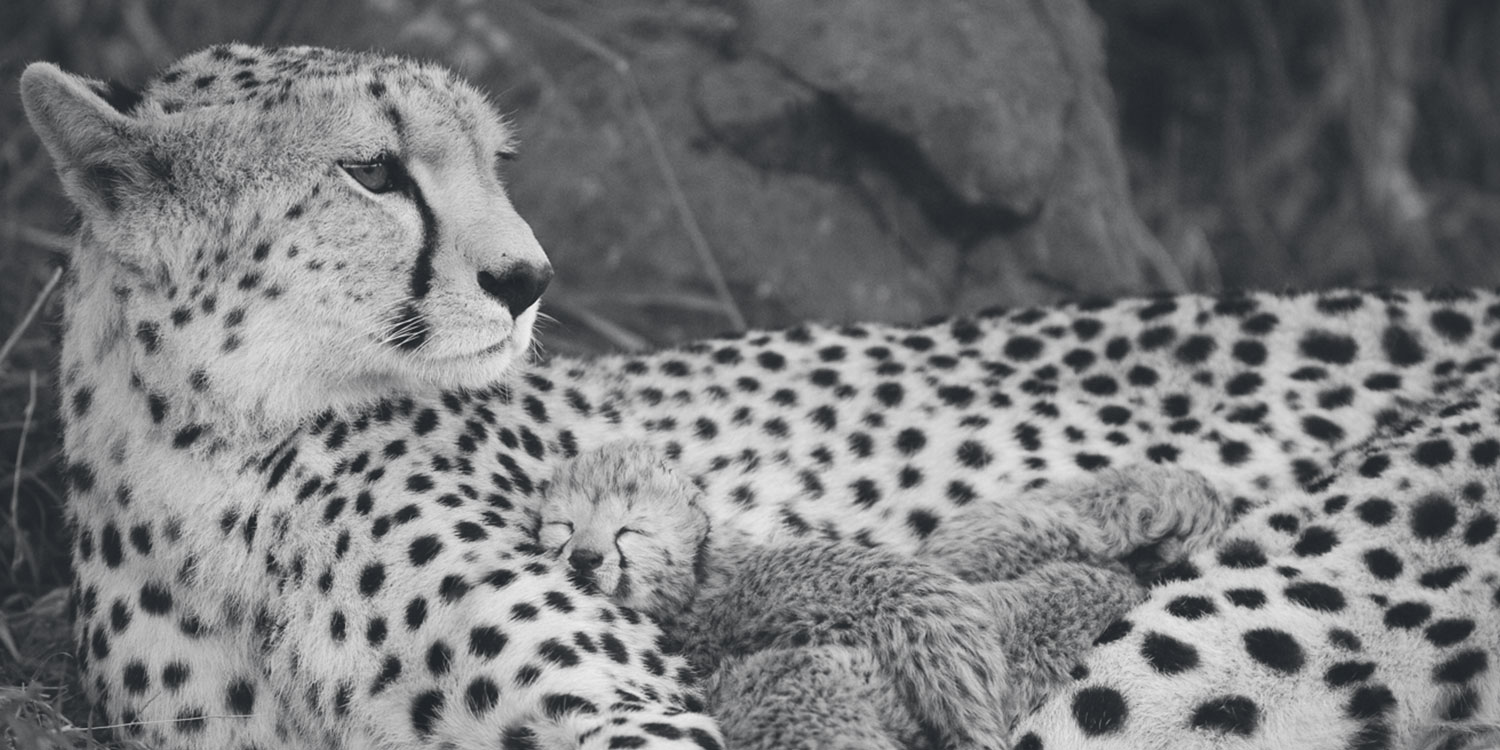
Behaviour Cheetahs have a unique, well-structured social order. Females live alone except when they are raising cubs. The females raise the cubs on their own. The first 18 months of a cub's life are important - cubs learn many lessons because survival depends on knowing how to hunt wild prey species and avoid other predators such as leopards, lions, hyenas, and baboons. At 18 months, the mother leaves the cubs, who then form a sibling group, that will stay together for another 6 months. At about 2 years, the female siblings leave the group, and the young males remain together for life. Males live alone or in coalitions made up of brothers from the same litter. Some coalitions maintain territories in order to find females with which they will mate. Territories are often located in areas where there is a rich supply of wild game and/or water. Fierce fights between male coalitions, resulting in serious injury or death, can occur when defending territories.
Cheetahs hunt in the late morning and early evening. They capture their prey by stalking - until they prey is within 10-30 meters - before chasing. The prey is suffocated when a cheetahs bites the underside of the throat. Chases last about 20 seconds, and rarely longer then 1 minute. About half of the chases are successful. In Namibia, cheetahs use playtrees (trees with sloping trunks and large horizontal limbs, usually camelthorns) to observe their surroundings and mark the area. Cheetahs make chirping sounds, and hiss or spit when angered or threatened. They purr very loudly when content.
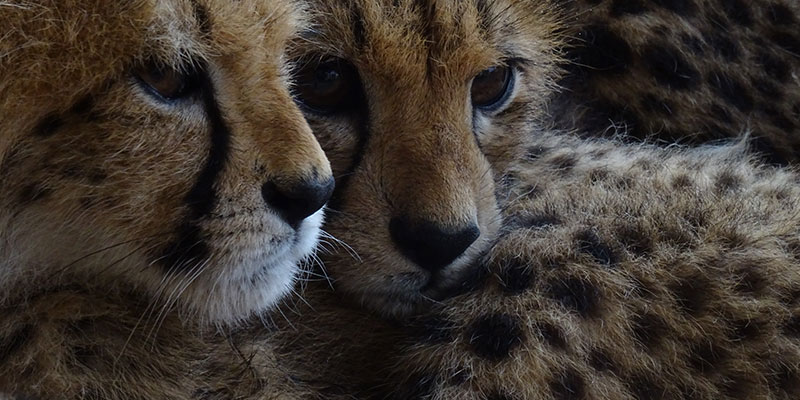
Reproduction Sexual maturity occurs at 20-23 months. The gestation period is about 95 days, and the average litter size is 4-5 cubs. Cubs are smoky-grey in color with long hair, called a mantle, running along their backs; they are up to 30 cm long and weigh 250-300 grams at birth. The mantle has several purposes: it is thought to camouflage the cub in dead grass, hiding it from predators, and to work as a mimicry defense, causing the cub to resemble a honey badger (ratel).
Population About 10,000-12,500 cheetahs are estimated to remain in 24 to 26 African countries and less than 100 animals in Iran. Namibia has the world's largest number of free-ranging cheetahs with about 3,000 animals. 
Life Expectancy Studies have not been conducted in the wild on longevity; 8-12 years is average in captivity. Cub mortality is high for the species in both the wild and captivity. An average 20 percent of all cubs born in captivity die within one month of birth, and in Tanzania's Serengeti National Park, about 90 percent die before reaching the 3 months of age.
Diet Small antelope, young of large antelope, warthog, springhare, and game birds.
Natural History Cheetahs have been kept in captivity for some 5,000 years. However, they breed poorly, and the captive population has been maintained through wild collection. Cheetahs suffer from a lack of genetic diversity making them more susceptible to disease and decreasing reproduction. The many parks and reserves of Africa offer protection for only a small amount of cheetahs. In these parks, lion and hyena numbers increase, and the cheetahs cannot compete with these large predators which kill cheetah cubs and steal their prey. Evolution has favored speed, and not strength for this species.
Survival Threats Decline in prey, loss of habitat, and indiscriminate trapping and shooting as a livestock predator threaten the survival of the cheetah throughout its range.
Legal Protection Legally, the cheetah today is well protected at an international level. On 1 July 1975, CITES (the Convention on International Trade of Endangered Species) placed the cheetah on Appendix I, making international trade in live cheetah or cheetah products illegal. Local laws support CITES in many countries where cheetahs still live. In the U.S., the Fish and Wildlife Service (FWS) first listed the cheetah on 2 June 1970, and is currently designated as Vulnerable or Endangered in its entire range.

The cheetah is a protected species in Namibia, but people are allowed to remove cheetahs if they pose a threat to livestock or human life. Unfortunately, some farmers will capture cheetahs indiscriminately (the "conflict" animals may not be singled out), often removing or killing those that have not taken any livestock. Limited international trade in live animals and skins is permitted from Namibia, Zimbabwe, and Botswana. Illegal trade in other parts of Africa and indiscriminate capture and removal in southern Africa continue to threaten the survival of this species.
Conservation To help this sleek hunter of the African wild win its race against extinction, we must:
  1. Help protect its habitat and ensure a place for it on Namibian farmlands
  2. Aid in the conservation of the wild prey base
  3. Halt the indiscriminate capture and removal of the cheetah
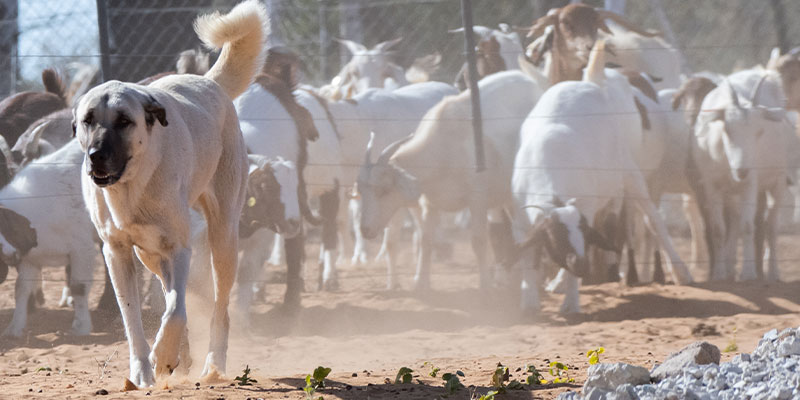
  4. Improve livestock management
  5. Educate everyone about the need to conserve biological diversity, and the predators' unique role in a healthy ecosystem.
  6. Ensure that cheetahs can provide economic benefits to the farmers on whose land they live.
Captivity Cheetahs are wild animals. Capture of wild cheetahs threatens the survival of the species in two ways. First, the removal of individuals reduce the species' genetic diversity in the wild. And secondly, cheetahs do not breed well in captivity. The Asian cheetah is nearly extinct because of its capture for private use. Special dietary requirements, unique needs, and unpredictable behavior make this a poor pet. Wild instincts remain intact even with tamed and captive-raised animals.