
EDUCATION GOAL
To raise awareness of the plight of the cheetah and society’s role in its long-term survival.
EDUCATION OBJECTIVES
-
To conduct programmes to convince the national and international citizenry that the cheetah is a valuable resource that must be conserved, and to provide a knowledge base that will encourage and assist the farmer in conservation.
-
To assure that predator conservation issues are included in formal education curricula and textbooks, and to develop partnerships with institutions of higher learning to help train and influence future scientists and decision makers
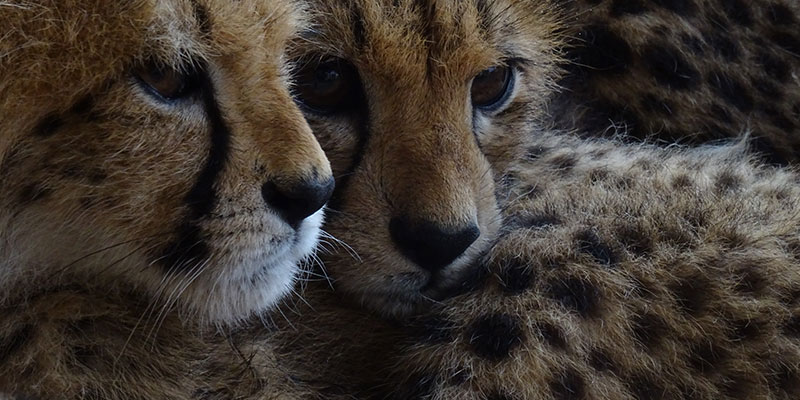
If the cheetah is to survive, it is essential that the value of the world’s fastest cat is recognised both within its range countries and internationally. Environmental education plays a key role in Cheetah Conservation Fund’s (CCF) programs that empower Namibians to protect their land and wildlife in an economically sound manner.
CCF believes that public education and the development of national pride in the cheetah are critical to its survival, and therefore educates farmers, teachers and the public about the need and methods to conserve Namibia's rich biodiversity and the role of the cheetah and other predators in healthy ecosystems. CCF’s Education Program includes:
CCF’S Field RESEARCH AND EDUCATION CENTre
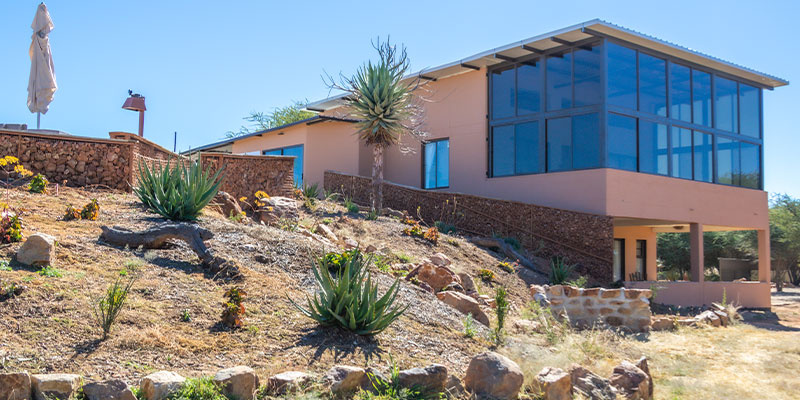
In central Namibia, CCF operates a Field Research and Education Centre to conduct formal and informal education programs. The Centre is open to the public daily, as well as on-site public education and student training to Namibians and foreign university students.
At a national level, the objective of CCF’s Research and Education Centre is to teach young Namibians the value of sustainable practices in environment and conservation from an early age. The Centre allows students to be exposed to CCF’s integrated research programs on the cheetah’s ecology, habitat and prey base, and the demonstration of CCF’s non-lethal livestock/predator management techniques. Relevant issues are presented regarding factors that affect conservation efforts at the community level. The Fund's education program and cheetah museum displays are designed around CCF scientific research findings and provide detailed information about the cheetah; its history, physiology, importance within the ecosystem, conflict with humans, and what CCF is doing to ensure the species’ survival for future generations.
The CCF Education Team present two-day environmental courses for school groups with overnight accommodation provided at the CCF educational campsites. All participants are exposed to CCF’s research and conservation efforts via presentations, and to the Namibian farmland ecosystem through the museum, nature trail and game drives. Team-building activities are designed to highlight the importance of team efforts in conservation. Role-play and drama are also included in the programmes and include scenarios of livestock and predator management. Since 2000, over 16,000 students have participated in these courses. In addition to school groups, regional youth groups, youth officials, teachers, health officials and farmers, participate in specially designed programs at CCF’s Center. You can visit
CCF Namibia's Education Centre and take a virtual tour of the displays there.

Otiwarongo children painted three 5m long pieces of fabric with cheetah images and other designs inspired by local nature and wildlife.
SCHOOL OUTREACH PROGRAMS
In addition to educational activities conducted at the Center, the CCF Education Team present outreach programs at schools and community events throughout Namibia. Since 1994, over 250,000 students have participated in a CCF outreach program, approximately 10,000 per year.
FARMER TRAINING AND COMMUNITY OUTREACH
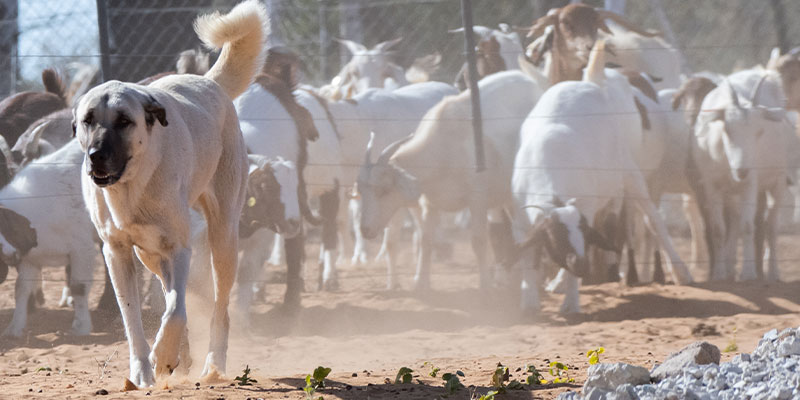
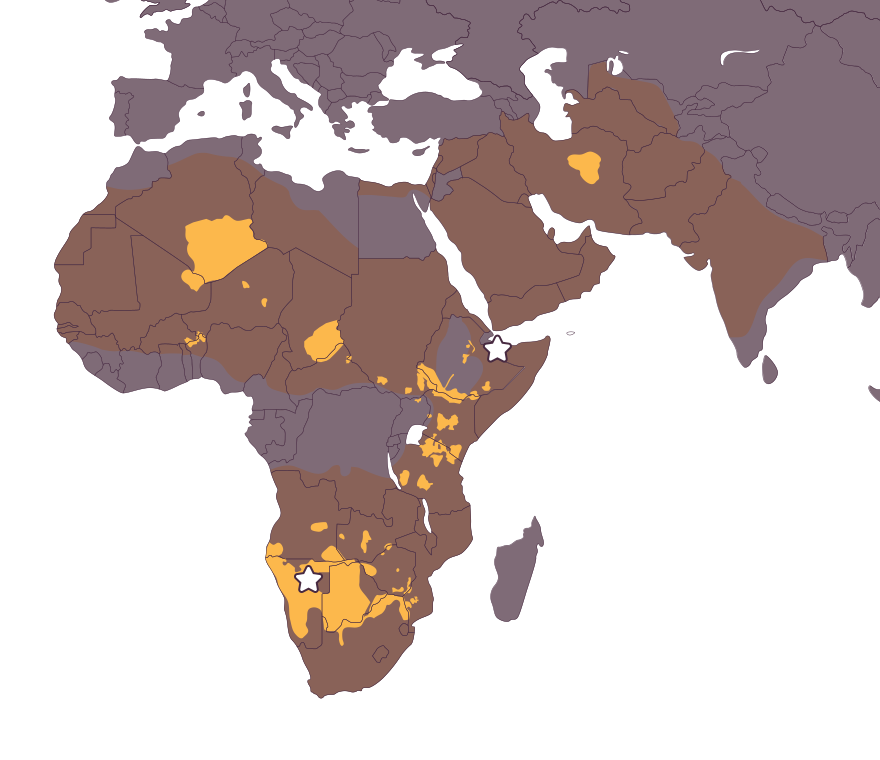
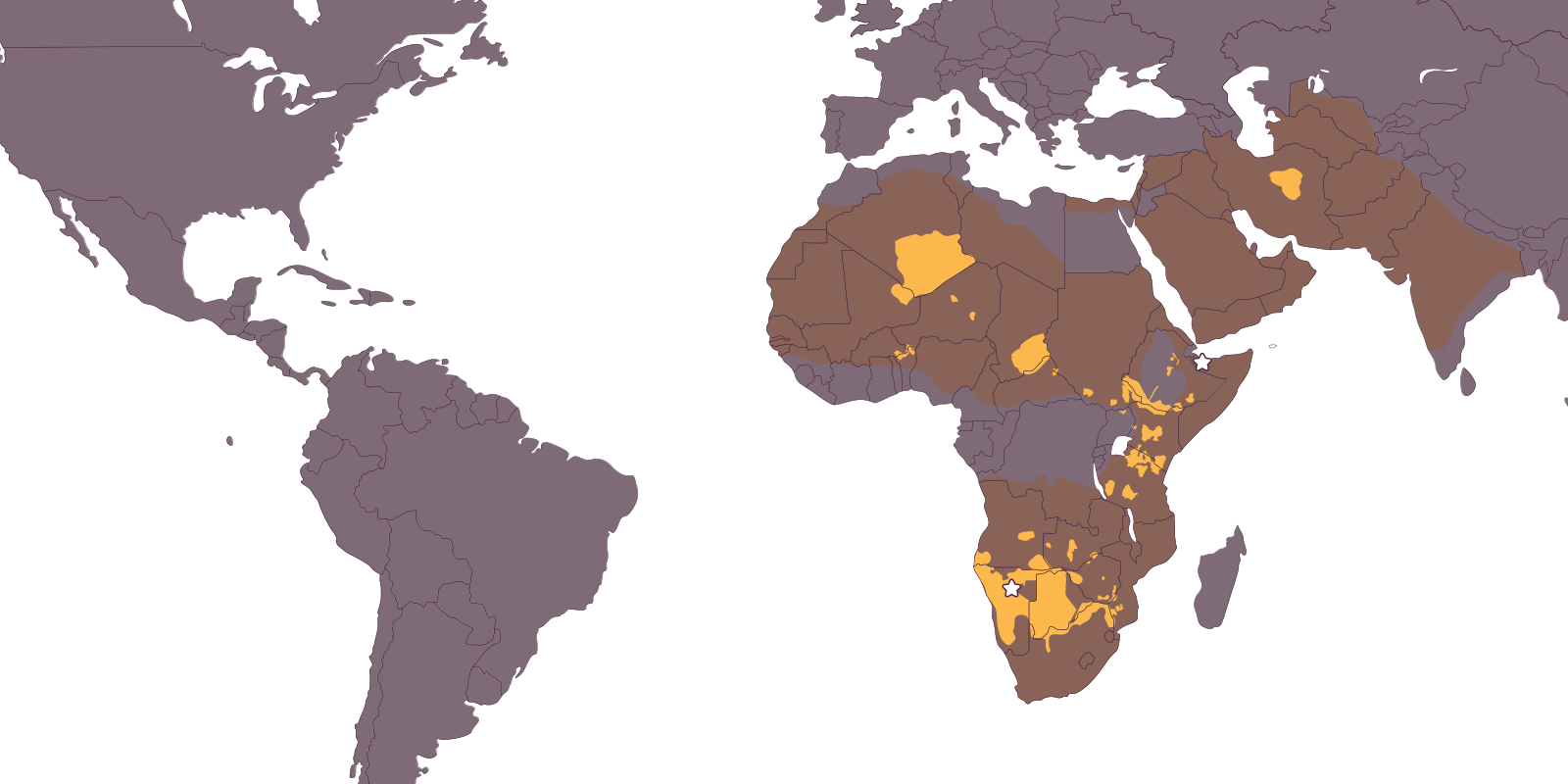
As 90 percent of Namibia's wild cheetah live on farmlands and come into conflict with farmers and livestock and game farming interests, CCF conducts a specific environmental education program for the farming community. CCF makes presentations at individual farms, farmer's associations and agricultural shows, highlighting proven cheetah behavioural characteristics and predator-friendly livestock management techniques.
The CCF education team conducts weeklong training courses for communal conservancies, emerging and re-settled farmers, and extension officers. CCF’s courses are aimed at improving the understanding of farming production principles and systems as well as providing hands-on practical training. In addition to tackling topics such as cattle husbandry, herd and veld management, disease and vaccination programmes, business principles, inventorying conservancy resources, basic conservation training on sustainable wildlife utilisation and the role and value of predators and predator kill identification as well teaching other ‘predator-friendly’ farming practices. Over 1000 participants have undergone training at CCF’s Centre. Several training courses are conducted each year.
INTERNSHIPS
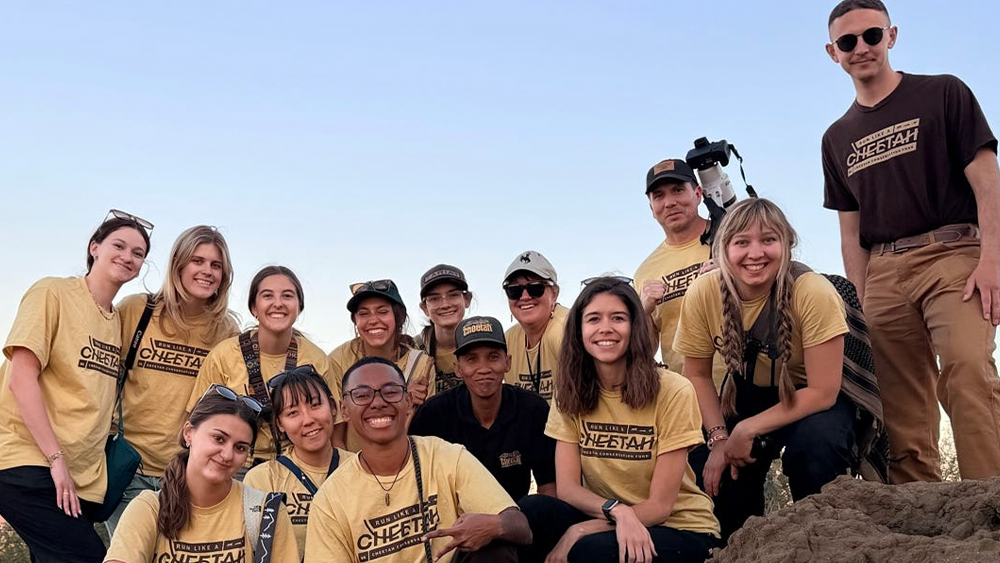
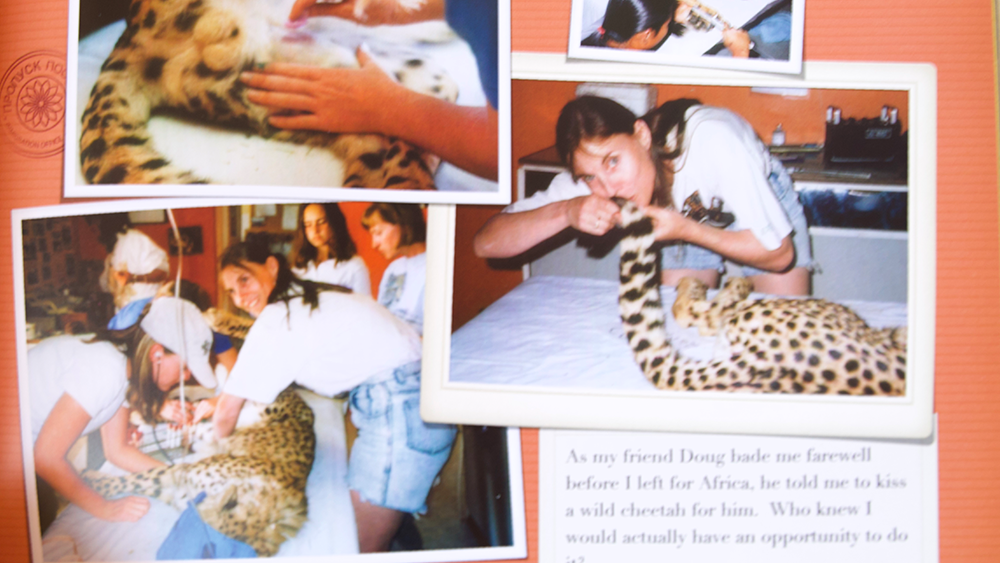
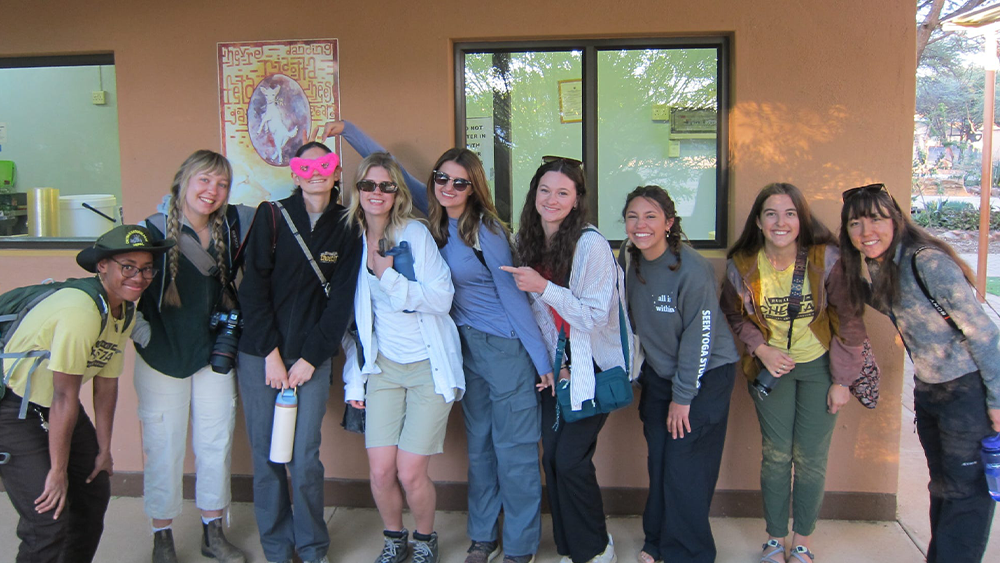
CCF operates several educational partnerships where students complete internships at CCF as part of their course. These include Master's degree students in Conservation Biology from the University of Namibia, training programmes for undergraduate students from the University of Namibia and Polytechnic of Namibia, and United States undergraduate students from the Oregon university system, and Round River Conservation Studies. In addition, international university students come to CCF to study aspects of the cheetah and its ecosystem.
INTERNATIONAL TRAINING COURSES
Cheetah conservation is interconnected to social, economic, and environmental factors, which are of national concern. The next generation of African conservation managers must be equipped with the best training available. CCF hosts several education and conservation biology courses each year for wildlife professionals. Collaborative partners include the, Howard G. Buffett Foundation, Smithsonian Institution and the Namibian Ministry of Higher Education, Miami University. Namibian and international course participants have completed courses on natural resource management, environmental education, conservation biology, game capture, and integrated wildlife, livestock and predator management.
PUBLIC AWARENESS
CCF conducts a strategic media campaign to raise awareness of cheetah-related environmental issues both within Namibia and internationally and include TV documentaries, magazine and newspaper articles.
ENVIRONMENTAL EDUCATION CURRICULA AND RESOURCE DEVELOPMENT
To train and influence a new generation of conservationists, CCF works to assure that predator conservation issues are included in formal education curricula textbooks, and develops partnerships with government departments and institutions of higher learning. To support the environmental education program, CCF produces and distributes educational materials for primary, middle school, college students, and teachers, as well as a livestock and wildlife management guides, biannual farmers' newsletter and other specialised materials for agricultural presentations. CCF has signed Memoranda of Understanding with the Government of Namibia Ministries of Basic Education, Higher Education, and Agriculture. These Ministries support CCF’s programs and distribute resource training materials.
CCF conducts training workshops for teacher and agriculture college students. CCF believes that it is essential that tomorrow’s farmers are taught new and sustainable livestock and wildlife management techniques that reduce conflict with predators. CCF also makes presentations to volunteer organizations with teaching programmes (such as Peace Corps and Voluntary Services Overseas - VSO).
Our Education Partners
CCF works closely with many institutions around the world. Long-term education programme partners include:
Agra Namibia
EarthWatch Institute
Cincinnati Zoo & Botanical Garden
Howard G. Buffet Foundation
Miami University Ohio
Oregon State University
Polytechnic of Namibia
Smithsonian Institution
University of Namibia (UNAM)
White Oak Conservation Center
Namibian Ministry of Higher Education
Click here 
for a short history of CCF's Educational Program. You can also visit the
CCF Namibia's Education Centre and take a virtual tour of the displays there.