
Dr. Laurie Marker
Founder and Executive Director
To see a list of publications by Dr Marker and colleagues click here, For an Abstract from Dr. Marker's PhD Thesis please click here or scroll down.
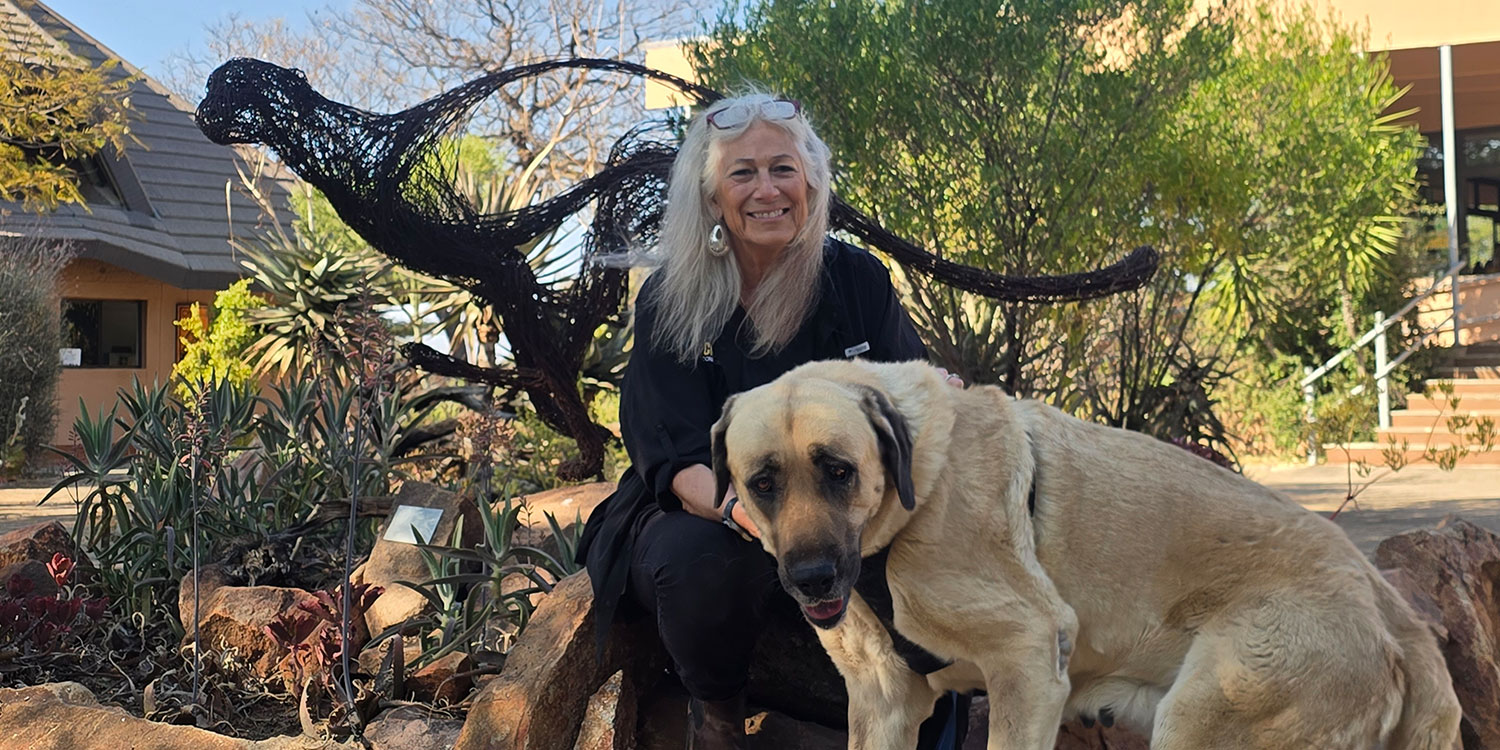
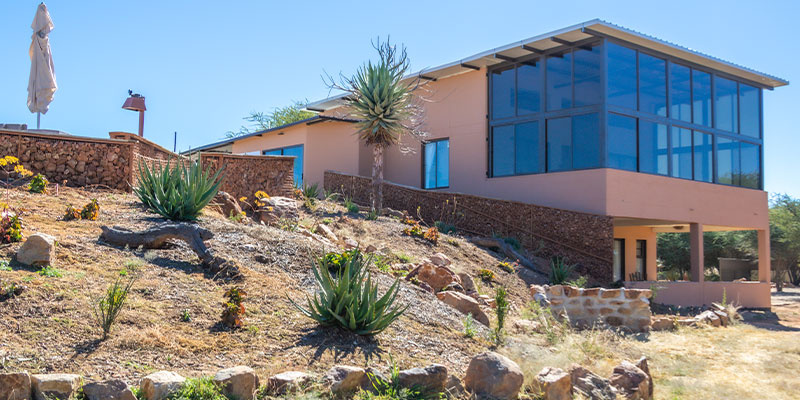
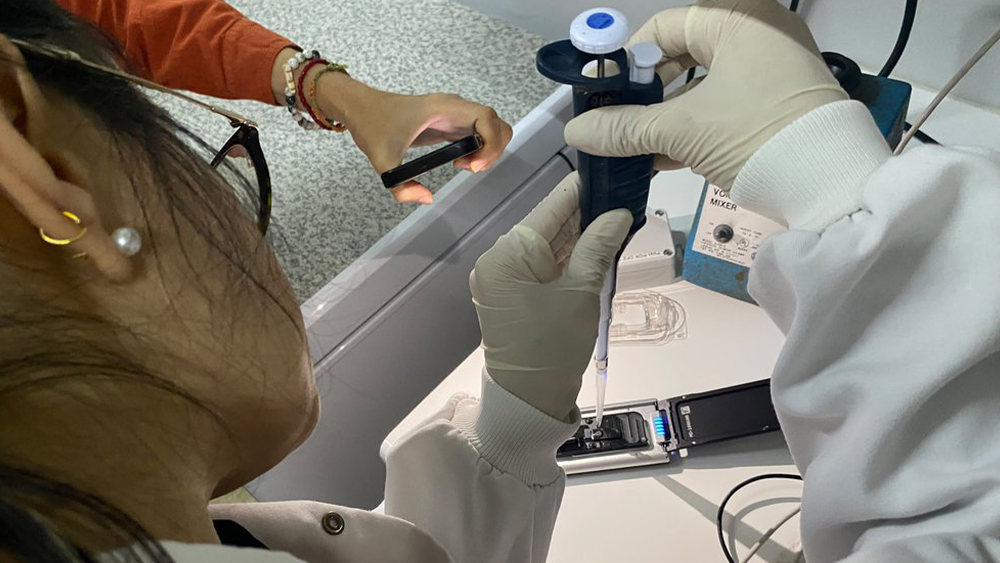
Dr. Laurie Marker is Founder and Executive Director of the Cheetah Conservation Fund (CCF). Having worked with cheetahs since 1974, Laurie set up the not-for-profit Fund in 1990 and moved to Namibia to develop a permanent Conservation Research Centre for the wild cheetah. CCF’s groundbreaking activities are housed at their International Research and Education Centre in the main cheetah habitat of the country. In July 2000, CCF opened a field research station to the public featuring a Visitor’s Centre as well as a Cheetah Museum and Education Centre.
Dr. Marker helped develop the U.S. and international captive program, establishing the most successful captive cheetah-breeding program in North America during her 16 years (1974-1988) at Oregon's Wildlife Safari in the USA. Laurie first came to Namibia in 1977 when she brought a captive-born, hand-raised cheetah to Namibia to determine if a cheetah must be taught to hunt or if the process was fully instinctual. This was the first-of-its-kind research to better understand if there was a chance for captive-born cheetahs to be re-introduced into the wild. Dr. Marker learned about the conflict between livestock farmers and cheetahs in Namibia, discovering that wild cheetahs needed help. For the next ten years, she continued travelling to Africa to learn more about the wild cheetah’s problems and what could be done to assist wild populations.
In the early 1980's, with collaborators at the National Zoo and National Cancer Institute (USA), Dr. Marker helped identify the cheetah’s lack of genetic variation, thus causing the species greater problems for survival. In 1988, in collaboration with these two institutions she became the Executive Director of the Centre for New Opportunities in Animal Health Sciences, based at Smithsonian Institution’s Nation al Zoo. She continues to serve as a NOAHS Research Fellow. In 1988 she developed the International Cheetah Studbook, a registry of captive cheetah worldwide, and is the International Studbook Keeper. In 1996 she was made a vice-chair of the World Conservation Union’s (IUCN) Species Survival Commission’s (SSC) Cat Specialist Group and now serves as a member on the core management group. Among numerous awards, Dr. Marker has been recognised as one of Time Magazine’s Heroes for the Planet in 2000 and received the Zoological Society of San Diego’s Lifetime Achievement Award in 2008. More recently, she was awarded the 2010 Tyler Prize for Environmental Achievement and was a finalist for the BBC World Challenge. In Namibia, her home base, she received the Windhoek Rotary Club’s Paul Harris Fellowship in 2001, and in 2002 received a special award from the Sanveld Conservancy, signifying Namibia’s farming community’s public acknowledgement of Dr. Marker and CCF’s contributions. In 2002, Laurie received her doctorate from Oxford University, England.
Special Awards
| 2010 |
Explorers Club's Lowell Thomas Award |
| 2010 |
Tyler Prize for Environmental Achievement Recipient |
| 2010 |
Indianapolis Prize Finalist |
| 2009 |
BBC World Challenge Finalist |
| 2009 |
St Andrews Prize for the Environment Finalist |
| 2009 |
International Wildlife Film Festival Lifetime Achievement Award |
| 2008 |
Tech Museum’s Intel Environmental Award |
| 2008 |
San Diego Zoo’s Lifetime Achievement Award |
| 2008 |
Society of Women Geographers’ Gold Medal |
| 2008 |
Indianapolis Prize Finalist |
| 2005 |
Living Desert’s Track’s in the Sand - Conservationist of the Year |
| 2003 |
Chevron-Texaco Conservationist of the Year |
| 2002 |
Sandveld Conservancy’s Certificate of Honour, Namibia |
| 2002 |
Audi Terra Nova Awards Finalist, Southern Africa |
| 2001 |
Humanitarian of the Year, Marin County Humane Society |
| 2001 |
Paul Harris Fellowship, Rotary Club International, Windhoek, Namibia |
| 2000 |
Burrows Conservation Award, Cincinnati Zoo |
| 2000 |
Hero for the Planet, Time Magazine |
| 1997 |
Distinguished Leadership Award, American Biographical Institute |
| 1992 |
Conservationist of the Year, African Safari Club, Washington, DC |
| 1988 |
White Rose Award, Oregon's Top Ten Women |
| 1985 |
Outstanding Young Women of America |
| 1981 |
Oregon's Young Careerist, Business and Professional Women, for Roseburg |
National and International Activities
| 2008 to present |
Oregon Cougar Action Team (ORCAT) Board Member |
| 2008 to present |
Panthera Cat Advisory Council Member |
| 2001 to present: |
IUCN/SSC Cat Specialist Core Group Member |
| 1997 to present: |
Namibian Large Carnivore Management Forum |
| 1997 to present: |
Conservancy Association of Namibia, Executive Committee, Vice Chair, Chair (2004-2009), current Vice Chair |
| 1996 to present: |
Waterberg Conservancy, Executive Committee |
| 1996 to present: |
Namibian Veterinary Association |
| 1995 to 2001: |
IUCN/SSC Cat Specialist Group Co-Chair |
| 1993 to present: |
Namibian Professional Hunters Association, Rare Species Committee |
| 1991 to present: |
IUCN/SSC, Captive Breeding Specialist Group Member |
| 1988 to present: |
IUCN/SSC Conservation Specialist Group Member |
| 1995 to present: |
Species Coordinator, Cheetah African Preservation Program |
| 1988 to present: |
Cheetah Species Survival Plan, Propagation Committee Advisor (AZA/SSP) |
| 1987 to present: |
International Cheetah Studbook Keeper |
| 1987-1988: |
Cheetah SSP, Species Coordinator |
| 1984-1988: |
Cheetah SSP, Propagation Committee |
| 1982-1987: |
North American Regional Cheetah Studbook Keeper |
| 1977-1978: |
Re-introduction Research of Cheetah in Namibia |
Professional Experience
| 1990 to present: |
Founder and Executive Director, Cheetah Conservation Fund, Namibia, Africa |
| 1991 to present: |
Research Fellow, NOAHS Center, National Zoo, Smithsonian, Washington, DC |
| 1988-1991: |
Executive Director, NOAHS Center, National Zoo, Washington, DC |
| 1980-1988: |
Director, Marketing and Education, Wildlife Safari, Winston, Oregon |
| 1977-1988: |
Cheetah Curator, Wildlife Safari, Oregon |
| 1976-1980: |
Veterinary Clinic Supervisor, Wildlife Safari, Oregon |
| 1974-1976: |
Veterinary Clinic Assistant, Wildlife Safari, Oregon |
| 1973-1988: |
Co-Owner, Jonicole Vineyards and Winery, Oregon |
Summary
In an increasingly human-dominated environment, the task of successfully conserving large carnivores, such as cheetahs, is difficult due to real or perceived threats resulting in conflict and often their local extirpation. This research describes the causes and potential solutions to this conflict in Namibia. Cheetah biology and ecology were studied through physical examination, laboratory analy sis, radio-tracking and human perceptions using survey techniques.
Between 1991 and 2000 data collected on over 400 live-captured and dead cheetahs showed that a perceived threat to livestock or game was the reason for 91.2% (n = 343) of cheetahs captured and 47.6% (n = 30) of wild cheetah deaths. Both were biased towards males, with 2.9 males being captured for every female, despite an apparent equality of sex ratio. Human-mediated mortality accounted for 79.4% (n = 50) of wild deaths r eported, of which the majority involved prime adult animals, with a peak at around 5-6 years of age.
Polymorphic microsatellite loci were used to assess 313 Namibian cheetahs' variation, gene flow, paternity and behavioural ecology. Genetic analysis showed limited regional differentiation supporting a panmictic population and that persistence in Namibia depends on dispersal from regions throughout the country; therefore efforts of connectivity throughout the country should continue. Relatedness values confirmed family gr oups, and 45 new potential sire/dam offspring and 7 sibling groups were identified, providing information on dispersal and the success of translocation. Sera from wild cheetah were assessed for exposure to feline and canine virus antibodies to CDV, FCoV/FIP, FHV1, FPV, and FCV; antibodies were detected in 24%, 29%, 12%, 48%, and 65%, respectively, showing infection occurs in wild cheetahs; although there was no evidence of d isease at time of capture, these diseases are known to cause serious clinical disease in captive cheetahs. Neither FIV antibodies nor FeLV antigens were present in any wild cheetahs tested, however, the first case of FeLV in a non-domestic felid is described in a captive Namibian cheetah. Concern for contact with domestic animals is discussed. Focal Palatine Erosion (FPE), a dental abnormality found in captive cheetahs, was discovered in over 70% of the wild cheetahs and was correlated with dental malocclusions, and is of concern to the long-term health of wild cheetahs.
Namibian cheetahs have a mean 95% kernel home range of 1642.3 km2 (+ 1565.1 km2), the largest home ranges yet defined. Habitat type significantly affected the cheetah's spatial distribution and prey density. Radio-collared female cheetahs were more closely related to other cheetahs in the study area than males, indicating male dispersal. Continual cheetah perturbation may partially explain the unusually low density of che etahs in this area (estimated at only 2.5 cheetahs per 1000km2) despite the apparent abundance of prey.
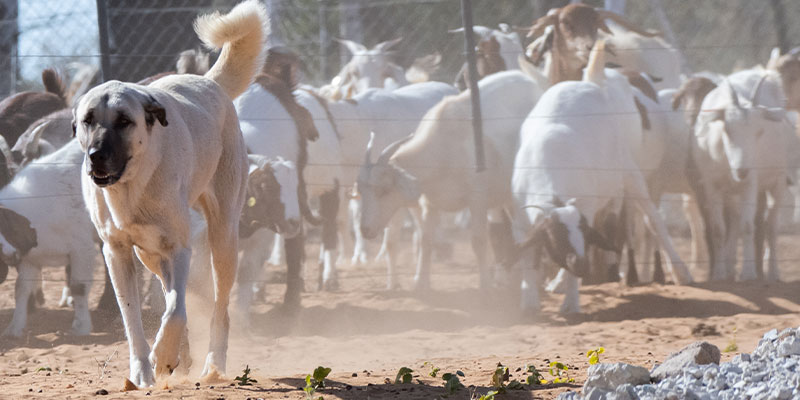
Namibian farmers originally surveyed revealed a mean removal of 19 cheetahs per year/farm, even when not considered a problem, and higher removals occurred on game farms. Evidence for actual livestock depradation was negligible, only 3% of reported captures. Scat analysis revealed cheetahs' selection for indigenous game, however 5% of scats contained evidence of livestock. Research conducted on methods of conflict resolut ion showed that placing Anatolian Shepherd livestock guarding dogs proved to be effective, with 76% of farmers reporting a large decline in livestock losses since acquiring an Anatolian. Such solutions appear effective in increasing farmer's tolerance for cheetahs, and by the end of the study period cheetah removals dropped to a mean of 2.1 cheetahs/farm/year. Implementing strategies such as these could be significant for re ducing human-carnivore conflict in the many other places in which it occurs.