
Conservation Programmes
CCF's conservation programs since 1990 have emphasized community-based conservation efforts aimed specifically at commercial farmers. Implementation of farmer outreach programs was intended to reduce cheetah mortality on commercial farms and associated research programs were designed to allow opportunistic data collection on individual animals that would have been otherwise destroyed. This approach has been highly successful: CCF has grown dramatically, new facilities constructed, professional collaborations established, research papers written and published. CCF has gained substantial international recognition. More importantly, by several measures, cheetah removals have declined and farmer attitudes improved. Yet, despite the relative success of CCF conservation efforts in Namibia, cheetah populations continue to face complex problems in differing ecological, social and political contexts throughout the cheetah's range. CCF's strategic vision for the next decade will facilitate the organization's ability to adapt to changing conditions and prioritise staff and resource allocation. This vision will integrate existing research information and lessons-learned from previous conservation efforts into enhanced and wider-reaching conservation programs.
PROTECTING CHEETAH HABITAT AND WILDLIFE PREY SPECIES

Wildlife naturally moves between individual farms, and so it is important to bring together the management of wildlife within a community. Conservancies, on both communal and commercial lands, are collaborative partnerships of neighboring farmers who work together to develop and implement sustainable livestock and wildlife management systems. CCF is an active member of the Waterberg Conservancy that surrounds the Waterberg Plateau Park. Nationally, CCF sits on the board of the Conservancy Association of Namibia (CANAM).
LIVESTOCK & WILDLIFE MANAGEMENT TECHNIQUES
During the 1980’s, livestock and game farmers halved the Namibian cheetah population, indiscriminately removing nearly 10,000 cheetahs. To prevent further population decline, CCF works with farmers to investigate, develop and implement livestock and wildlife management techniques that are then exhibited at CCF’s model farm. Predator-friendly livestock management techniques include establishing calving seasons, using calving kraals, herders, dogs and donkeys as livestock guardians, electric fencing and warthog swing gates. CCF promotes these livestock management solutions in farmer publications and media, and at agricultural shows, meetings, and colleges and universities and also through our farmer training courses. CCF is encouraged that there is now far greater awareness of the cheetah's role in the ecosystem, and an increasing number of farmers adopt predator-friendly livestock management practices and fewer cheetahs are being killed.
LIVESTOCK GUARDING DOG PROGRAM
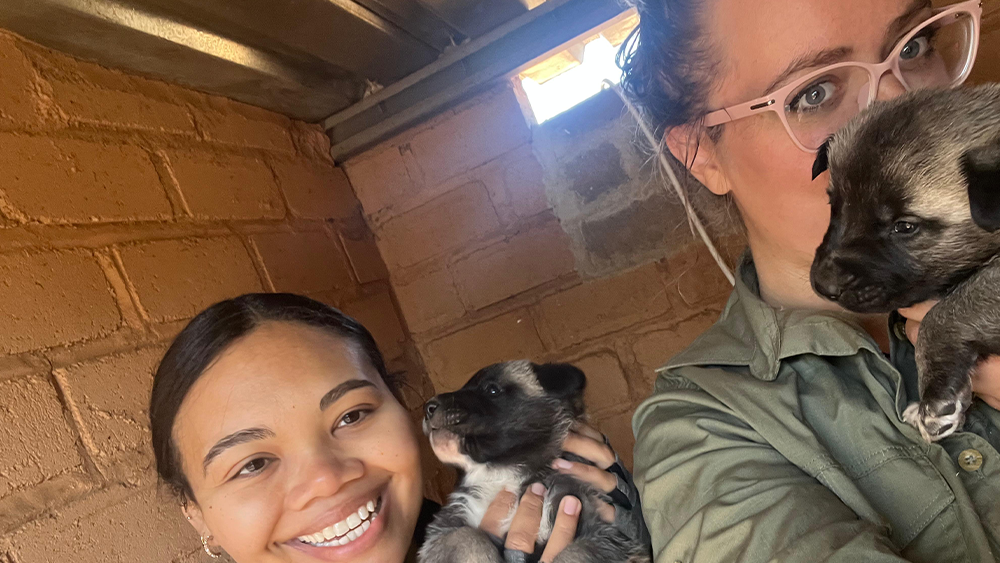
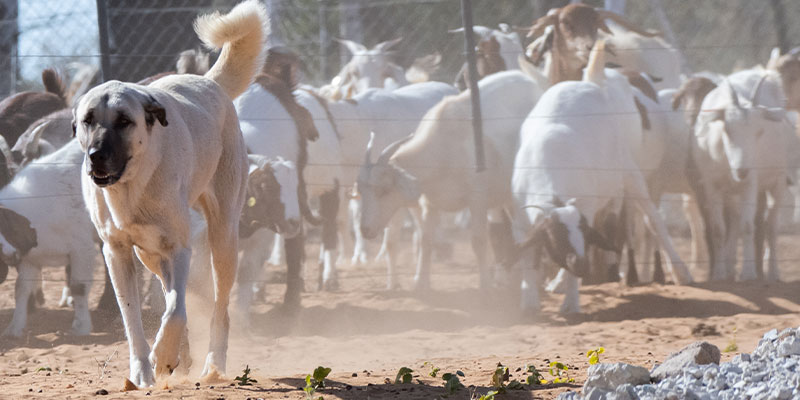
Kangal Anatolian Shepherd livestock guarding dogs originate from Turkey where they have protected livestock from predators for over 6,000 years. In 1994, CCF initiated a program to bring Anatolians to Namibia. The first Anatolians proved so successful that CCF established a breeding program; teaching local farmers Anatolian husbandry and training techniques, and monitoring and evaluating the dogs’ performance. As of the end of 2008, more than 300 dogs have been born and placed on commercial and communal farmers throughout Namibia with over 85 percent of farmers reporting a significant reduction in livestock losses. The program has become a model for Livestock Guarding Dog use around the world. For more information about this program, click here.
GLOBAL MANAGEMENT PLANNING AND POLICY INVOLVEMENT
CCF participates in government forums and organizations in Namibia and around the world to help influence public policy through interaction and involvement. To encourage and facilitate a global plan for the management of the cheetah, CCF takes a leadership role in the Large Carnivore Management Association of Namibia (LCMAN), and the Conservancy Association of Namibia (CANAM). Internationally, CCF is a founding member of the Global Cheetah Forum and CCF's executive director is one of six core members in the Cat Specialist Group of the World Conservation Union (IUCN). CCF also develops and implements reintroduction programs in range countries and works to ensure that the rate of removal by hunting, culling, or displacement does not negatively impact the sustainability of the species. The Fund coordinates and communicates with the members of the global captive cheetah community by maintaining the International Cheetah Studbook and assisting with the development of regional and international management plans.
SUSTAINABLE ECONOMIC SUPPORT FOR LOCAL COMMUNITIES AND CCF
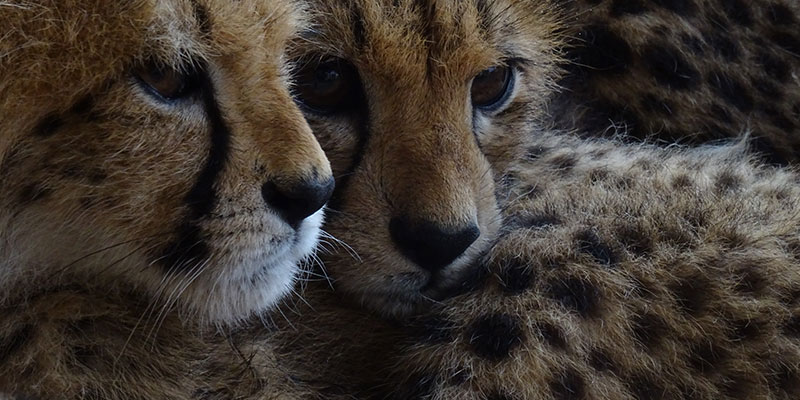
Humans must co-exist with cheetah if the world's fastest cat is to survive in the wild. CCF supports sustainable, environmentally appropriate activities that assure the economic well-being of people living within the cheetah's range and provide resources to support long-term CCF programs.
BUSHBLOK
Much of Namibia's farmland is now thickly infested by thorn trees, and it is estimated that over N$700 million is lost annually from this 'bush encroachment.' Bush encroachment effects cheetah habitat and prey. In 2001, the CCF Bush Project was established with a grant from United States Agency for International Development (USAID) to study the ecological impact of bush encroachment and assess the economic viability of transforming harvested thorn trees into a household fuel product. 'Bushblok' fuel logs will help restore cheetah habitat, supply Namibian and international markets with compacted fuel log products, employ, train and empower historically disadvantaged Namibians, provide business opportunities, and develop economic, environmental and social standards for bush harvesting, chipping, processing and packaging. Bushblok also carries the Forrest Stewardship Council (FSC) certification stamp of approval. To learn more about CCF Bushblok (PTY) Ltd., click here.
CHEETAH COUNTRY BEEF
Farmers and cheetahs can live together, and farmers are vital partners in cheetah conservation. In order to motivate farmers to live with the cheetah that are so vital to the ecosystem, CCF initiated the Cheetah Country Beef program in partnership with the Conservancy Association of Namibia (CANAM) and the Namibian meat industry. Cheetah Country Beef is an eco-label that will provide a financial incentive for farmers who practice cheetah-friendly livestock management techniques. Certified farmers will be paid a premium for the beef they sell. This new business initiative provides a viable economic opportunity while helping safeguard the survival of the cheetah and other predators. Click here to learn more about CCF's Cheetah Country Beef project.
ECO-TOURISM