


Cheetah Census Methodologies

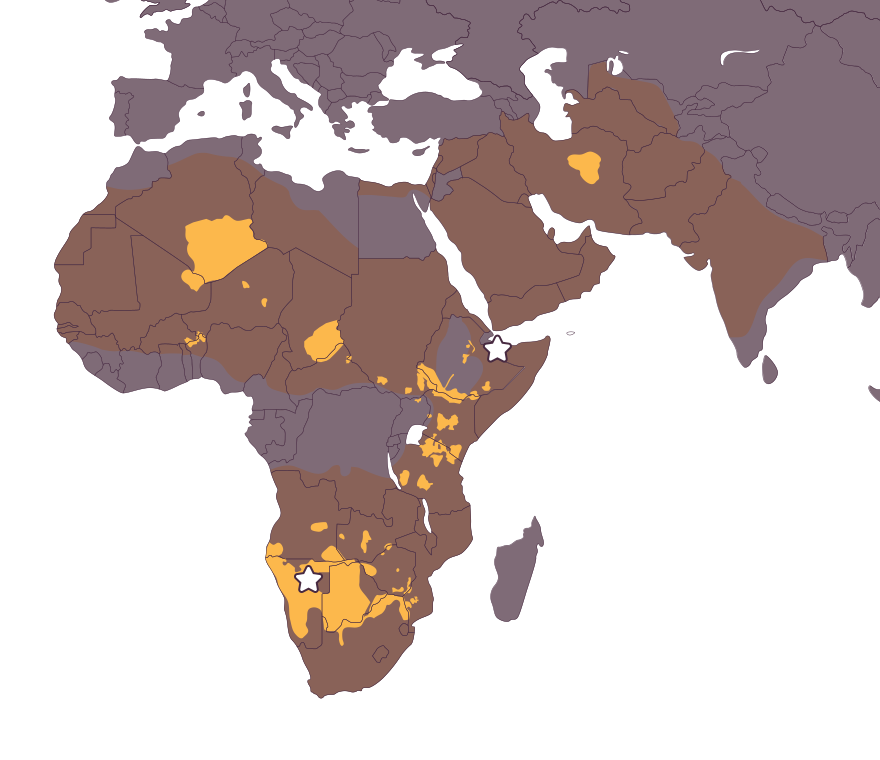
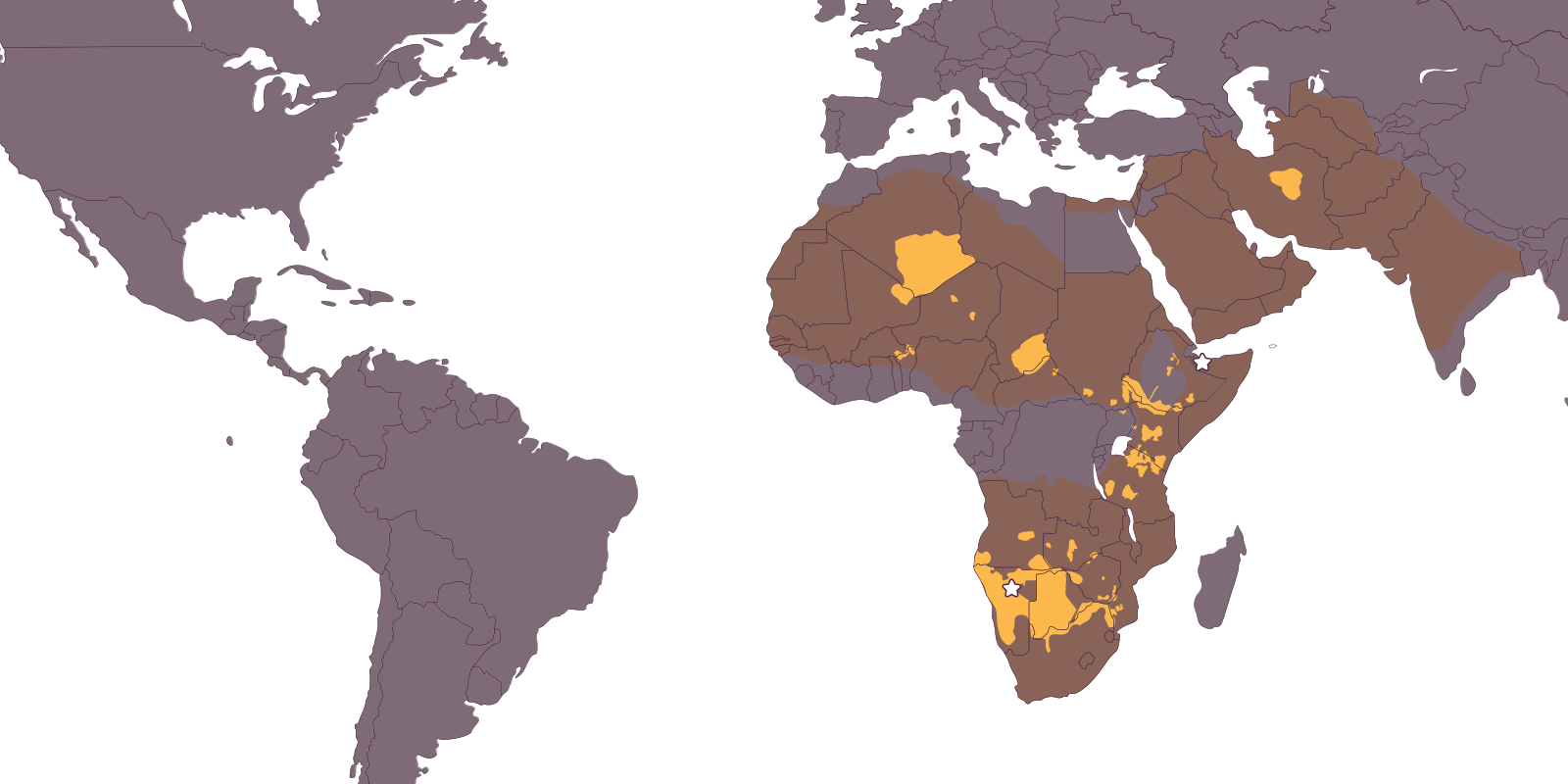
In Namibia, cheetahs, despite their classification as a threatened species, have long been persecuted by farmers, with the aim of reducing depredation upon farmed livestock and game. Implementing suitable conservation strategies hinges upon developing reliable estimates of population status and trends. Experts gathered at the Global Cheetah Conservation Action Plan meeting in 2001 ranked developing repeatable and consistent census methodologies as a priority for cheetah conservation.
These methods include direct counts, spoor/track counts, mark-recapture approaches such as camera-traps (photo) and DNA analysis, the use of proxies (e.g., prey abundance), use of hunting data, radio telemetry, questionnaires and semi-quantitative trend analysis; but many methods still require systematic field trials to determine their efficacy in terms of censusing large carnivores. Although many of the census techniques described above could be used for cheetahs in Namibia, there has been little calibration of their accuracy and reliability under field conditions. Furthermore, many of the techniques that could potentially be used to census cheetahs, such as mark-recapture studies, have been found to be biased in Namibia due to a skewed sex ratio of captured cheetahs, which makes it difficult to form reliable estimates of population size and trends.
Given the secretive nature of cheetahs, indirect census techniques are likely to be the only viable method of collecting useful population information. Indirect censusing relies upon the detection of signs such as hair, spoor or scat (faeces) of the target species, and has been used effectively to gain population data for a wide range of species. The efficacy of these census techniques is, however, potentially limited by the ability of human searchers to find signs (a particular problem in Namibia’s thick thornbush habitat) and incorrect species identification after signs are located.
Search dogs have proved to be a highly effective tool in the development of such wildlife studies: They were reported as being four times as effective at finding fox scats as human searchers, and demonstrated a 100% correct species identification record. The use of these dogs in field studies could be of immense benefit to cheetah researchers, but it is critical to first quantify and calibrate their efficacy through methodical trials so that this technique can be utilized to maximum effect in the field.
CCF is testing the efficiency of search dogs in detecting cheetah scat, with the ultimate goal of using the abundance and occurrence of cheetah scat in the wild as an index of population density and distribution. Significant recent developments in the field of DNA analysis mean that scat samples can be effectively utilized to extract DNA and provide some estimate of population size in an area. These data will prove invaluable in developing the most appropriate conservation strategies and management policies for cheetahs on Namibian farmlands.
ENTER FINN
To this effect, in March 2009 CCF welcomed Finn and his owner, Philadelphia Zoo curator Chris Bartos. Finn is a border collie raised and trained by Chris, and will join our cheetah census team (photo, L-R, with John Hunter, Isha, Chris Bartos, Finn and Anne Schmidt-Küntzel).
HOW IT WORKS
The project involves three stages: controlled trials in large, natural enclosures; field tests; and subsequent DNA analysis of scat collected in the field, and will start with an 18-month study utilizing the extensive cheetah holding facilities at the Cheetah Conservation Fund research base in Otjiwarongo, Namibia.
WE NEED YOUR HELP!!!
This is an exciting project that offers endless possibilities not only for the cheetah, but for other species sharing the cheetah habitat. However, it has a total cost to CCF of $106,300 and we need your help. Please support Finn’s work to make this project successful. Make a donation. Click here.