
CCF Namibia
CCF Headquarters/Visitor, Research and Education Centres
Cheetah Conservation Fund
PO Box 1755
Otjiwarongo, Namibia.
Email CCF Namibia
Tel: +264 (0) 67 306 225
Fax: +264 (0) 67 306 247
In Namibia the Cheetah Conservation Fund is an Incorporated Association Not For Gain, with Registration Number 21/20002/341.
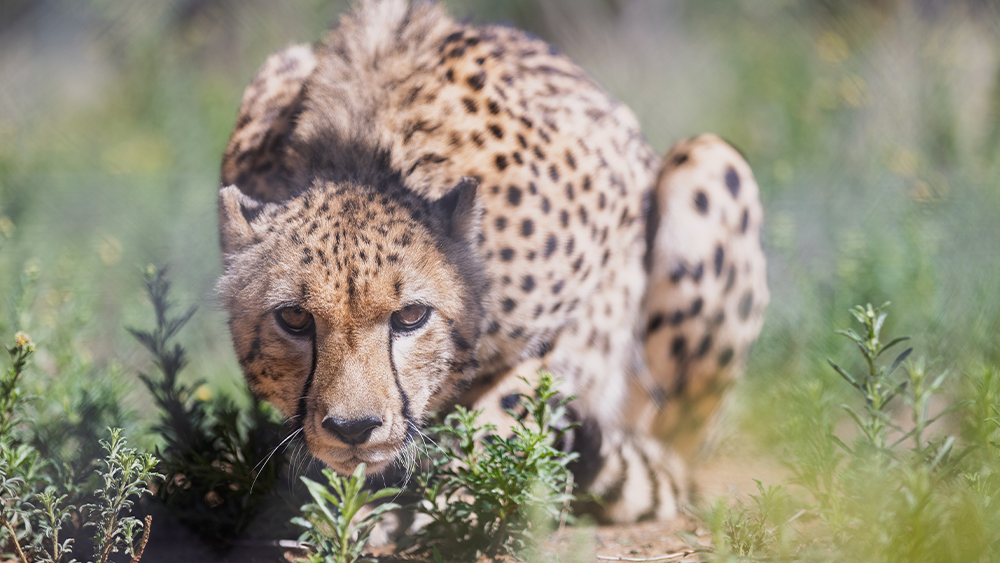
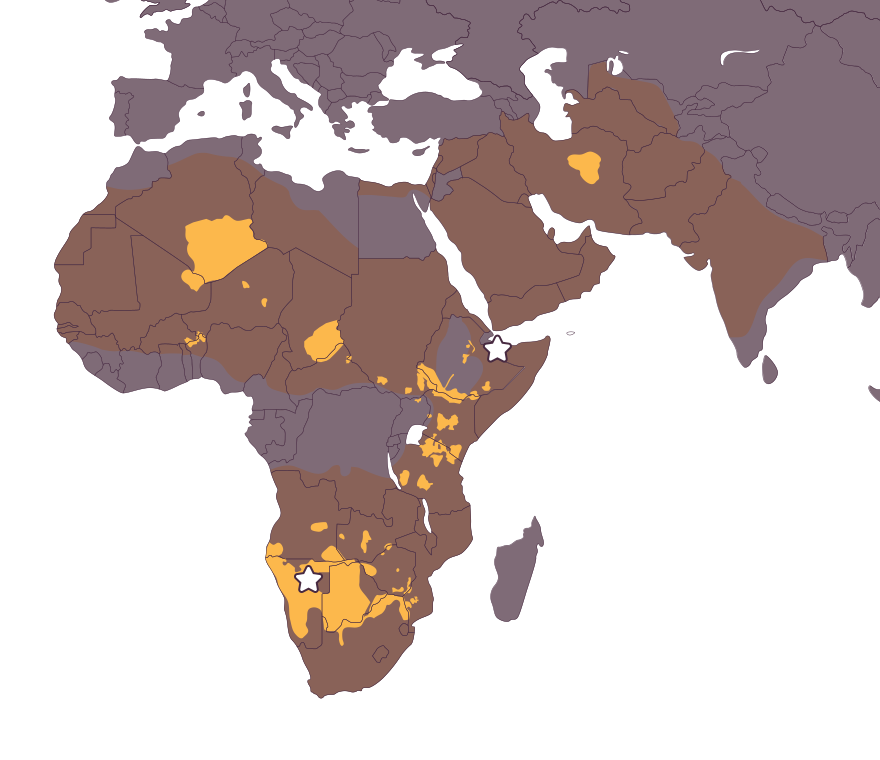
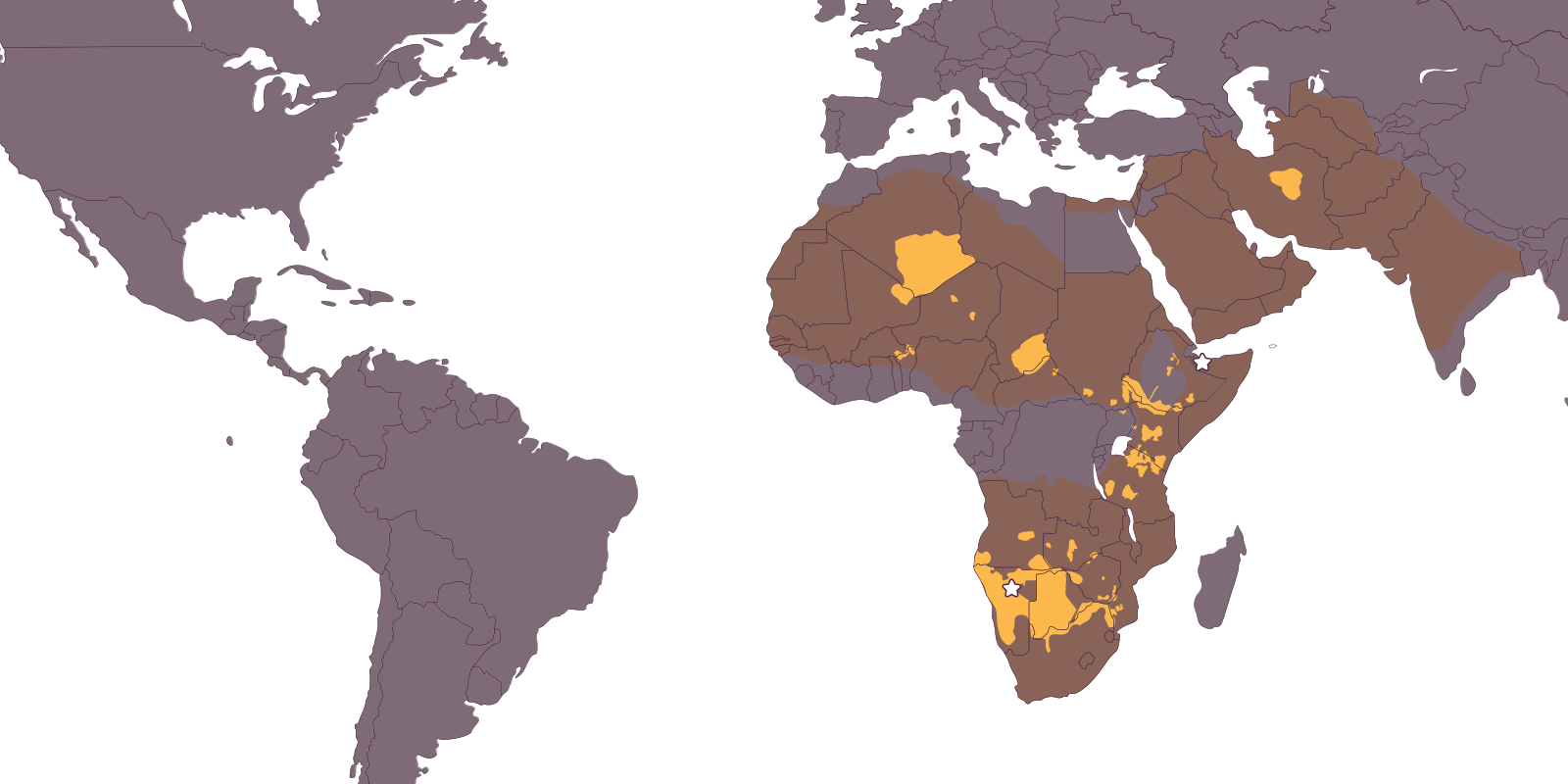
Founded in 1990, the Cheetah Conservation Fund (CCF)'s mission is to be the internationally recognised centre of excellence in the conservation of cheetahs and their ecosystems. CCF will work with all stakeholders to develop best practices in research, education, and land use to benefit all species, including people. CCF will work with all stakeholders within the cheetah’s ecosystem to develop best practices in research, education and ecology and create a sustainable model from which all other species, including people, will benefit. As Namibia has the largest and healthiest population of cheetahs left in the world, CCF's International Research and Education Centre is based in Namibia, near Otjiwarongo.
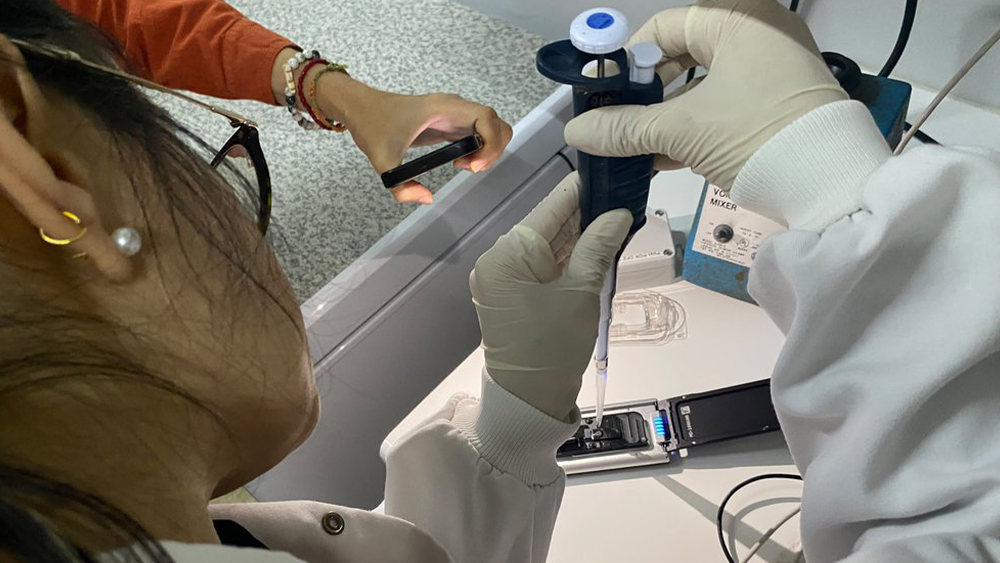
CCF's stance is that understanding the cheetah's biology and ecology is essential to stabilise the population and manage its sustainability for the future. Its strategy to save the wild cheetah is a three-pronged process of research, conservation and education, beginning with long-term studies to understand and monitor the factors affecting the cheetah's survival. Results of these studies are used to develop conservation policies and programmes to sustain its populations. CCF actively works with local, national and international communities to raise awareness, communicate, educate and train. Some of CCF's approaches include:
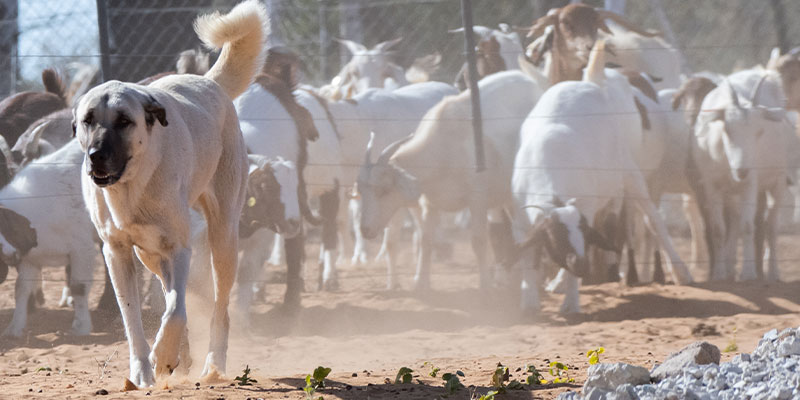
- Conducting intensive scientific research and publishing papers on research findings--in cheetah genetics, biology, ecology, health and reproduction, human impact, and species survival, including assistance with the management of captive and free-ranging cheetah throughout the world. CCF also develops and implements non-lethal predator control and other better livestock management practices. These include CCF's Livestock Guarding Dog Programme, and the relocation of problem cheetahs, which attempt to eliminate the need for ranchers to kill cheetah.
- Creating and managing long-term conservation strategies for the cheetah throughout their range. CCF researchers develop, test, and promote alternative land-management practices such as conservancy development, and eco-tourism.
- Carrying out local and international conservation education programmes to illustrate ways in which the species can be protected, by addressing community upliftment and predator-conflict resolution. CCF also creates and disseminates education materials worldwide.
- Building capacity in countries that still harbour cheetah populations. The international programme currently includes distributing CCF materials, lending resources and support, and providing training throughout Africa and the rest of the world.
CCF is a proactive organisation that finds practical solutions to help people to help the cheetah and this is reflected in the CCF Vision: "We see a world in which cheetahs live and flourish in co-existence with people and the environment".
The CCF's Research and Education Centre's Dedication
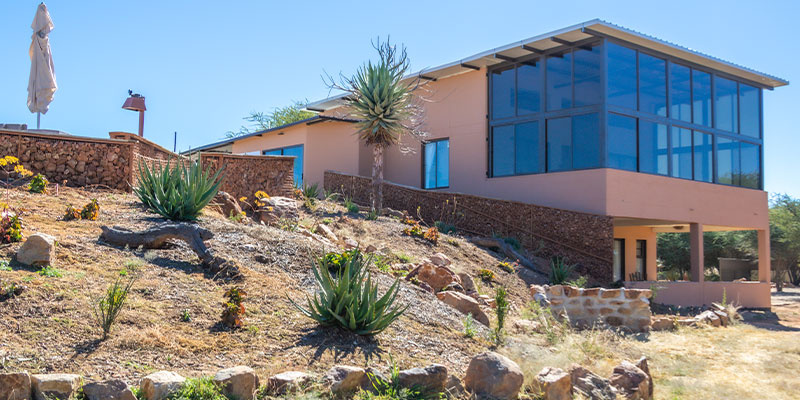
22nd July 2000 marked an important time in CCF's history, as His Excellency Dr. Sam Nujoma, President of the Republic of Namibia and CCF's International Patron, dedicated the new Haas Family Cheetah Research Centre and the Carl and Cathryn Hilker Education Centre. This represented the culmination of two years of renovation. The Research Centre houses a veterinary clinic, laboratory and main offices. The Visitor's Centre includes a large meeting room, a small cafe and catering kitchen and gift shop. The Education Centre provides students and visitors the opportunity to learn more about the behaviour and biology of the cheetah and the Namibian ecosystem that supports Africa's most endangered cat species.
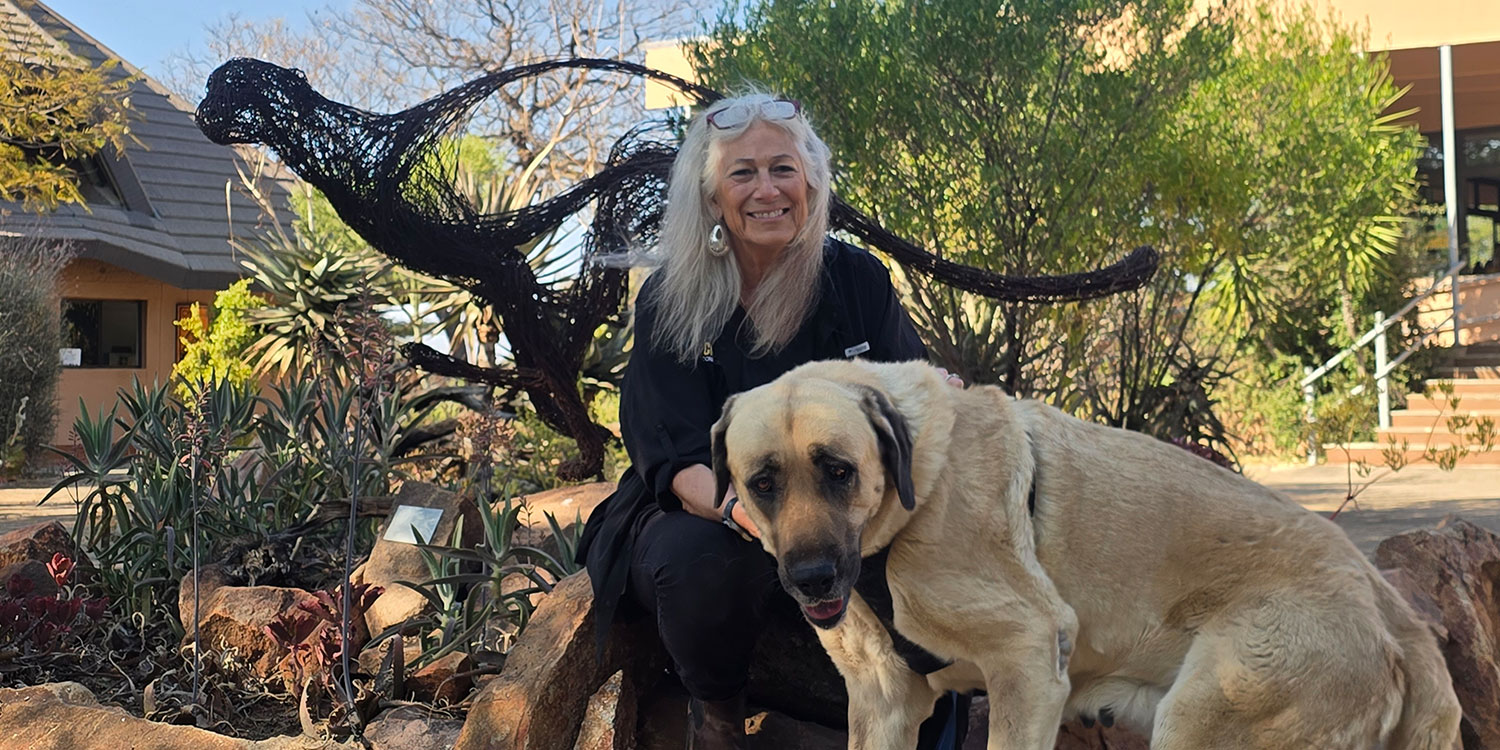
All areas focus on a landscaped courtyard with native gardens. The centre of the courtyard includes a beautiful wire frame cheetah sculpture donated by Amy Malouf, former Round River Conservation Studies student.
The dedication of CCF's Research and Education Centre also marked CCF's 10 year anniversary of active in-situ cheetah conservation in Namibia. CCF has been actively changing humanity's understanding and learned negative behaviours towards predators since 1990. Namibia has the greatest potential of maintaining a habitat and prey base for the cheetah. With the assistance from 'cheetah friends' throughout the world, Namibia has become proud of being the 'Cheetah Capital of the World.'