

CCF Bush (Pty) Ltd.

CCF Bush (Pty) Ltd.
PO Box 769
Otjiwarongo, Namibia
Phone: +264 (0) 67 304 806
Fax: +264 (0) 67 304 430
http://www.bushblok.com/
EmailE-mail us.

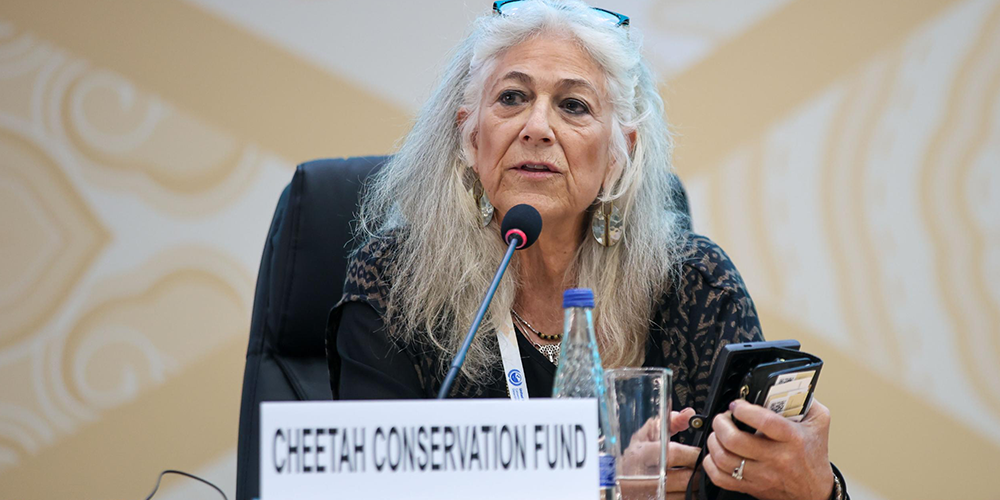
At the 2012 Clinton Global initiative annual meeting, dr. laurie marker and ccf committed to expanding the bushblok program. view the video announcement here.

The purpose of the Bush Project is to create a viable market for biomass products derived in environmentally and socially appropriate means. This will encourage the removal of excess bush from Namibian farmlands. Depending on the results of this pilot project, habitat restoration efforts could be vastly scaled up to restore cheetah habitat on an ecologically appropriate scale.

Watch the BBC World News Documentary on Bushblok here.

Bushblok Fuel Logs Help the Cheetah's Cause

Overview

The Cheetah Conservation Fund (CCF) — an international NGO with Canadian, UK, and US charity status — is the driving force and sole owner behind this venture, which is based in Otjiwarongo, Namibia. The CCF operates from its facility, 44 kilometers outside of Otjiwarongo, in the centre of Namibia's farmland. The organization develops and implements long-term monitoring, and multi-disciplinary research and education programmes to ensure the survival of the cheetah and its ecosystem. The CCF also works with the local community to encourage sustainable, predator-friendly farming practices.

In 2001 CCF obtained a USAID grant to enhance the long-term survival of the cheetah, and other key indigenous Namibian wildlife species, on Namibian farmlands by developing a habitat improvement program that would be both ecologically sound and economically viable. We started to assess the viability of an income generating initiative that utilizes intruder bush as a resource. CCF Bush Pty Ltd was established to harvest and process invader bush and to manufacture and market wood fuel briquettes from the excess thornbush.

The CCF Bush Pty Ltd is fully operational. Twenty Namibians are employed either within the processing plant in Otjiwarongo or in harvest and chipping operations. Long-term monitoring of biodiversity measures is in place on experimental harvest plots. All harvest sites are located on CCF properties. The production process is simple: the bush is manually harvested (by axe and panga) in the field and left to dry for at least 4 weeks. The dried bush is chipped by a self-powered wood drum chipper and the chips are transported to the processing plant by truck. At the processing plant the chips are hammermilled to 8mm size, further dried by hot-air (when necessary), and fed into extrusion presses. The heat and pressure of the extrusion process bonds the material into a logstream, there is no need for additive binders. The logstream is cut into individual logs and banded and wrapped for sale.

We have Forest Stewardship Council (FSC) certification for our activities. We are producing briquettes and exporting to Europe and South Africa, trademarked as Bushblok. We are also investigating biomass power production and wood fuel pellets.

We invested in some mechanical harvest equipment to increase our volume throughput. Other production machinery includes two self-powered wood chippers, custom-built chip transport trailers, and Shimada extrusion presses. We have also collaborated with a study, NAMBIO-PROJECT, within the Dept of Forestry and sponsored by the Finnish government regarding the feasibility of a 5-20MW biomass electric power plant, biogas production, and co-firing at least one of the Van Eck boilers. We are most interested in piloting a small, perhaps 150KW, gassifier plant and are still developing sources and funding for that project. We have also provided raw processed chips to a pilot project in Windhoek aimed at producing composite wood.

CCF was awarded the 2008 Tech Award in the Intel Environment Category for its CCF Bush Project.

The Project's Strategy:

  • Develop harvest methodologies that are economically, environmentally, and socially appropriate
  • Test various chipping and transport methodologies to assure delivery of sufficient quantity and quality of raw chips to the processing plant
  • Establish a processing plant which will use bush chips as raw material, add no chemicals or binders, and produce a clean and economically viable alternative to existing products such as firewood, coal, lump charcoal and charcoal briquettes used for cooking fuel and barbecues
  • Encourage other industries to use bush wood as raw material
  • Employ, train and empower Namibians as work force and management staff as well as provide opportunities for self-employed entrepreneurs
  • Encourage local businesses to harvest and transport the raw material and finished products

Raw Material Resource

Various studies estimate that 10-12 million hectares, representing 12-14% of Namibia are seriously infested by undesirable bush species. Other studies have determined that about 10 metric tons per hectare of excess wood biomass are available for production. This could provide over 100 million tons of raw materials available for production. With one production plant processing about 5000 tons per year, it is obvious that there is sufficient raw material available for many such plants.

The Products

CCF Bush produces wood chips for direct sale as a raw material and as raw material for our own extrusion plant. CCF Bush produces fuel logs by an extrusion process. These logs can be used as either a raw material or to burn as a direct energy source. Wood extrusion is the process of joining biomass together by the use of pressure, heat and the natural lignin, cellulose and hemicelluloses in the product to form a natural binder. In addition to wood chips, sunflower hulls, peanut shells, rice hulls and straw are currently being successfully utilized in this process. A critical success factor is the continuous availability of clean, inexpensive raw material. Our briquette product is trademarked as Bushblok. Bushblok is useful for cooking fires, braii, home heating, and industrial heat applications. As a result of the extrusion process, it has a calorific value approaching coal, some 4870 Kcal. It has an after burn ash content of 0.35-0.5% and is classified as a Smokeless Fuel.

Trials carried out in British laboratories showed that extruded wood logs, the target product of this business, emit radiant heat that is somewhat higher than Coalite and UK Grade 2 house coal, major potential competitors. Wood logs already in the UK market have demonstrated long burning time and low ash content making this a very competitive product for this market. The CCF Bush process will initially produce 75mm round by 200mm long extruded logs such as those currently used in many countries as a domestic heating fuel. The "heat logs" manufactured through this process are internationally approved as a clean burning fuel for smokeless zones. They are natural products, contain no additives, are clean and are easy to handle. Plants in South Africa, using a variety of raw materials, are in production using this process where they are successfully produced and marketed. There are different shaped products such as pellets that can be manufactured by the same extrusion process. These products will be explored during the development as possible ways to expand the market.

Human Resources

CCF Bush employs people in research, field operations, plant operations, administration and marketing.

Entrepreneurs may eventually manage all field operations as subcontractors providing raw chips to the factory according to specifications. However, the economically preferable method or methods of harvesting the bush from the field needs further development and the project is utilizing one harvesting and chipping team directly as well as developing local subcontractors. This dual approach will provide both an adequate and controllable supply of raw material for the extrusion plant start-up while developing the potential local supply base. As well as developing its own harvesting data, CCF Bush will require that chip suppliers provide data regarding production methods and harvesting rates. From the beginning of plant operations, local entrepreneurs will also be encouraged to buy and market both chips and logs for resale in the community.

The chipping and harvesting operation employs 20 people for clearing and chipping, and within the processing plant, with additional employment at the sub suppliers. Transportation of both the chipped bush and the end products provide additional opportunities for employment.

The Production Process

The harvesting of biomas and the production of heat logs is a well established process but must be refined and developed to assure that the bush harvesting, chipping, transport, refining, extrusion and packaging are done to assure an efficiently produced and quality product that meets the environmental and economic goals of the project.

Bushblok PlantHarvesting of the bush will require that economic factors be developed for the best methodology for both the landowner and CCF BUSH. Factors such as farmer plot clearing requirements, estimates of standing biomass, habitat improvement for cheetah, harvesting techniques, chipping techniques, pollution, and re-growth control are required before the economic potential can be fully developed. Harvesting of the brush has been initiated and is a completely manual operation at this time. This provides the most job creation and excellent control of the harvest. Various mechanically assisted harvesting techniques will be developed and evaluated as part of the total pilot project.

The chipping also requires extensive development of the process and equipment that is best suited for the targeted Namibian bush and the resources of the harvesting entrepreneur. It is assumed now that the chipping will take place in the field as it will be much cheaper to transport bush in chip form. The type of chipper, dryness of the bush before chipping, crew safety and ergonomics all require further development. CCF BUSH will start with a moderately priced drum chipper to develop initial chipping data and raw material for the extrusion plant while other types/sizes of chippers will be tested by either chipping partners or by CCF BUSH by use of leased/trial equipment.

Transport of bulk chips from the field to the extrusion plant will be another opportunity for local entrepreneurs. Many farmers have cattle trucks that can be temporarily be reconfigured to haul chips and it is believed that a surplus of hauling capacity is available in the area. The refining process for production of the logs is not new and it is known that critical factors are chip size and moisture content. A chip size of less than 8mm and a moisture content of less than 8% are required. Chipping size will be controlled by the use of a hammer mill as most of the field chippers produce a product too large for the presses. The Namibian CCF BUSH project has a high potential for improved efficiency due to the sunny, dry climate reducing the moisture content of the chips without any or with only minimal in-process drying. Techniques for sun-drying the bush both prior and after chipping are being developed and initial trials have been encouraging.

Dry chips are now ready for the extrusion process. CCF Bush has purchased a hammer mill and three presses to start the pilot study process. Production information on similar extrusion plants has provided a capacity of about 5000 tons per year using three shifts but actual production capacity with Namibian bush still needs to be demonstrated.

Packaging and transportation of the finished product are going to be market driven. The finish logs are clean and pack very densely, which will assist comparisons with competing products. A small strap pack binder has been obtained but additional packaging methods will be developed and may include shrink-wrapped, burnable paper wrapping, and binding. The development of an "eco-friendly" package in which the wrapper is burnable, biodegradable, recyclable or has a secondary use is a high priory development goal.

The Markets

CCF Bush sells in Namibia and is being exported to the UK, South Africa and Germany, while exploring other markets. The local market includes either raw chips for high efficiency chip burning stoves or the use of the logs for braais, earth stoves or open cooking fires. An initial marketing technique being development by CCF is to supply a chip-burning stove with the purchase of a consignment of chips. Additional uses of the raw chips will also be explored and may include products like chipboard, fence posts and compression formed wood for coffins or other products.

Finished Product awaiting shipmentIt is expected that the extensive use of wood for cooking and heating in most rural households will create a large potential for CCF Bush logs. It is very difficult, if not impossible to determine the amount of firewood that is sold in the informal market, but in most of Namibia firewood is being over-exploited leading to deforestation and desertification. This trend can only continue and market studies are being planned to determine the best way to enter this market for both the economic benefit of the project and the assistance it could provide for the environment.

The CCF Bush log will provide a good alternative in the local market for braai wood as direct competition to the alternatives available on the market due to its easy, clean handling, high caloric content and low flame burning characteristics. A market penetration policy will be developed with the most likely method utilizing local entrepreneurs purchasing in bulk at the factory to distribute to retail and informal markets in communities. Locally wood retails for about N$1000/ton and charcoal for N$1800/ton at stores. The informal market prices in townships are yet to be developed.

In addition to current export markets, CCF Bush is looking at other European markets. Extruded wood products for burning have been introduced in South Africa and have achieved market penetration beyond the 50,000-ton level. However, the European markets are believed to have the greatest potential. Producers in South Africa have focused their consumer education on the UK market where many houses use solid fuel for cooking and heating and there is a high potential for a superior, environmentally competitive product. This existing market development has established that extrusion logs are superior in usage characteristics such as clean handling and high caloric output. Earlier analyses using estimates have demonstrated that there is economic potential for this export market. Exchange rate sensitivity, shipping costs, and European demand and price will be continually monitored as the harvesting and production costs are developed by the pilot program providing a sound base accurate business plans.

An important aspect of the export of fuel logs will be the ability to obtain a "green label". As this is a completely natural product and its production will improve the local habitat, there should be market acceptance by eco-sensitive consumers. CCF Bush will explore the certification mechanisms that are internationally recognized such as FSC. The cost of FSC certification is very high and requires regular recertification but may be required and is highly desirable.

CCF would like to thank the US Agency for International Development (USAID) for their support of this program since 2001.

USAID Logo


Bushblok was Honoured as a finalist of the 2009 BBC World Challenge. Watch the documentary here: