
Algeria: North African Cheetah

Introduction

Until recently, most people didn't know that cheetah still occurs in Algeria. This small, remnant population of the critically endangered North African cheetah has been a focus for CCF over the past few years.

In 2004, Farid Belbachir, a young Algerian biologist teaching at Université Abderrahmane Mira de Béjaïa in Algeria, was selected as the lead Algerian biologist by the Sahelo-Sahara Interest Group (SSIG) for field training at CCF's headquarters in Namibia to begin program planning and capacity building toward an Algerian cheetah program. Already holding a masters degree, training in field biology techniques and cheetah biology and ecology was just the key to the next two years of research and collaboration in this vast desert harbouring North Africa’s perhaps last large cheetah population. Thus, this was the basis for many of the field techniques he is now putting into practice in his home country of Algeria to assist the critically endangered sub-species of cheetah. Through Farid's dedication, he helped to organize three collaborative field surveys in Algeria in cooperation with OPNA, the Cat Specialist Group, CCF, the Zoological Society of London, the Sahara Conservation Fund, and Groupe OGRAN. From this solidly laid base of cooperation, officials and communities of the Parc National de l'Ahaggar have embraced the cheetah into the cultural and faunal aspects of this amazing desert reserve. Farid has also enrolled in a PhD program at London University.

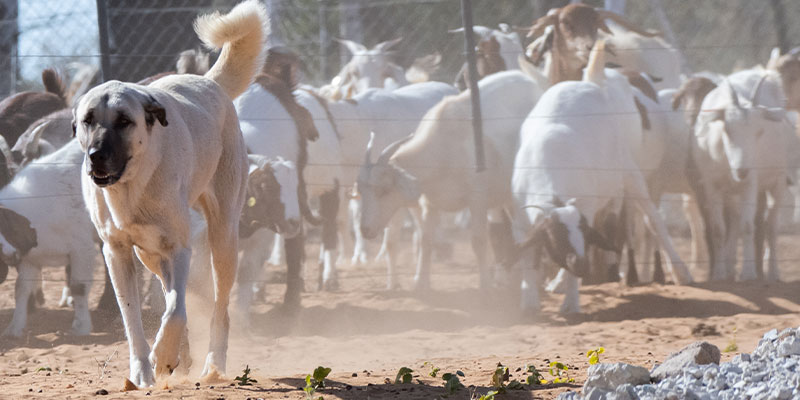
Algerian CheetahFollowing a gathering at the National Museum of Natural History in Paris, France in February 2005, where a North African cheetah group was formed, in March 2005, Dr. Laurie Marker spent a week in the Ahaggar Mountains in Algeria with several other biologists from the Sahal Saharan Interest Group (SSIG) looking for signs of cheetah and desert gazelle. The international survey team comprised Algerian representatives from the Algerian Ministry of Culture and the Office du Parc National de l'Ahaggar (OPNA), Université Abderrahmane Mira de Béjaïa (UB), and Agence Nationale pour la Conservation de la Nature (ANN), with SSIG members from Nature Division, Ministry of the Flemish Community (Belgium), Zoological Society of London (ZSL, United Kingdom) and Cheetah Conservation Fund (CCF, Namibia). Although no cheetah were viewed, evidence of their presence through much scat at trees existed. The team learned much from local nomadic people (Touaregs) - cheetah are known to catch small stock and camels, and are perceived as a nuissance to their camels, but not to smaller stock which tend to be protected by guard dogs..

In December 2006, Dr. Marker returned to the Ahaggar, this time for a dedicated North African cheetah meeting. An organization, of which Dr. Marker is a founding member, has been developed to focus on these small cheetah populations. During the 4-day meeting, discussions focused on the status of the North African cheetahs and conservation strategies in Algeria. As a result, further studies and collaborations were proposed. Director Ighilahriz of the Ahaggar National Park expressed his interest in sending a group to CCF Namibia to see CCF’s education and community programs that are embedded into our conservation and research programs.   

Another survey is being planned, this time in the Atlas mountains where a remnant population of cheetah may still be found. CCF believes that Algeria may provide the best hope for conserving the North African cheetah and we will do all we can to provide assistance in this effort. We thank Tusk Trust for partnering with CCF to move this process forward and look forward to further collaborations in Algeria and other cheetah range countries. 

Research

A report resulting from the March 2005 survey in Ahaggar includes an introductory part dealing with mission context, applied methodology, and habitat description. The report then documents the main results on wildlife observations, with particular stress on Dorcas gazelle, Barbary sheep and cheetah. Information on livestock and human activity are supplied, and cheetah and livestock interactions discussed. Finally, additional data on wildlife and camera trapping results are documented. No estimates of the cheetah population were made on available data, but the survey did demonstrate an area of occupancy approximating at least 10,000 km2. To view the report, click below:

Subsequently, in 2006, the SSIG released a new report of molecular genetics studies carried out on 48 carnivore faeces collected in Aghaddar during the March 2005 expedition. The report demonstrate the presence of cheetah and leopard in the area. In addition to eight cheetah DNAs, other intriguing findings include some species not thought to prevail in Ahaggar, such as leopard (thought to be extinct), mongoose, genet, and an unidentified canid (not assigned to jackals, Rüppell's or Fennec foxes).

Busby, G.B.J., D. Gottelli, S. Durant, T. Wacher, L. Marker, F. Belbachir, K. De Smet, A.Belbachir-Bazi, A. Fellous & M. Belghoul. A Report from the Sahelo Saharan Interest Group - Office du Parc National de l'Ahaggar Survey, Algeria (March 2005) - Part 5: Using Molecular Genetics to study the Presence of Endangered Carnivores  - 2006. (November 2006). Unpublished Report. vi + 19 pp.PDF Document

ABSTRACT: The status of the cheetah, Acinonyx jubatus, in Northern Africa is poorly known. Study of this species has concentrated on the two major populations of the Serengeti in Tanzania and in Namibia. A lack of detailed baseline data has led to an increasingly detached and unsure view of the present status of this animal in its most northern reaches of Africa. This paper represents the first steps to use multiple techniques to confirm the presence of cheetahs in Algeria and to show the power and importance of the genetics.

A joint 2005 expedition to the Ahaggar region of the Algerian Sahara collected over 40 putative carnivore scat samples for further analysis. The first major objective of this analysis was to assign species identity to the scat. This was done through genetic analyses of the samples. Among other carnivores, eight cheetahs and a leopard were found. This is the first time leopards have been recorded in this part of Algeria. Thus, this paper has an ancillary purpose in presenting a new way of using non-invasive molecular ecological techniques to compile a species list in remote areas where resources only allow for short reconnaissance studies.

Having identified the species present, the second objective of this study was to analyse the genetic structure of the cheetah samples through microsatellite studies. Cheetah from Tanzania were used as reference samples and combined in the analysis with the Algerian cheetahs, and the number of unique genotypes and possible kinship relationships were ascertained. The cheetah samples were then geo-referenced on a map containing information gathered on the 2005 expedition.

This paper, therefore, demonstrates the existence of cheetahs and leopards in Algeria and provides impetus for future work in this remote region.

Camera-trapping research.

The first photo of a wild cheetah in Algeria through camera-trapping research led by Farid Belbachir was widely covered on BBC News and other international media. Watch Reuters' interview with Farid and Sarah Durant of the ZSL here. For more media coverage on this extraorinary event, click here

Partnerships


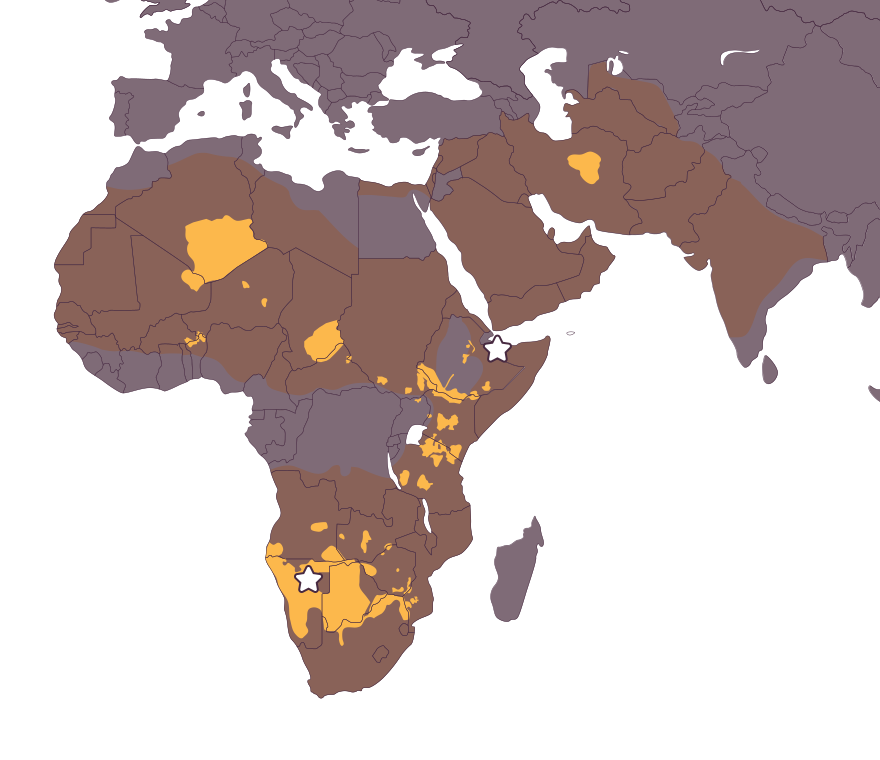
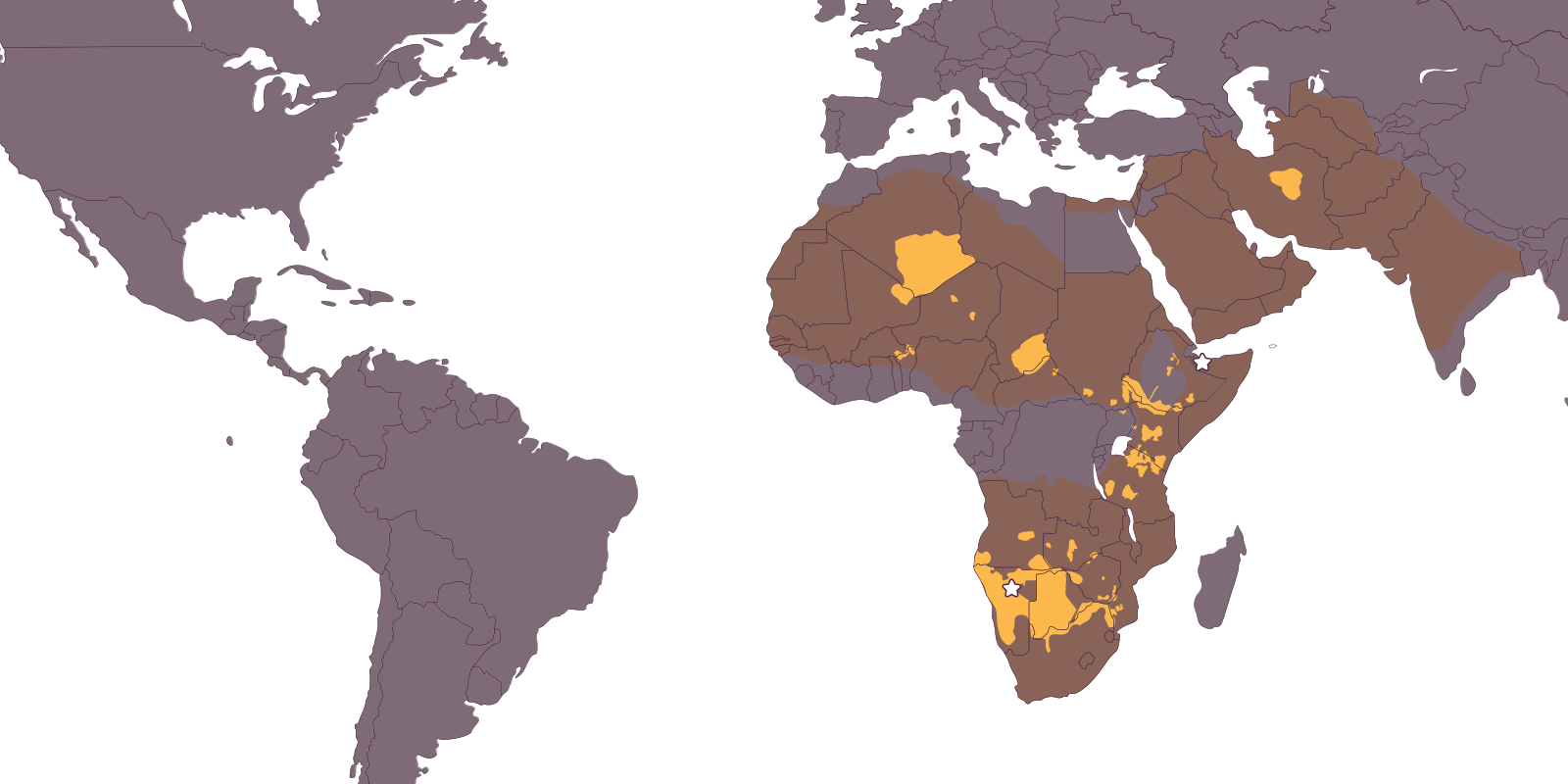
Algeria has one of the last populations of the northern cheetah subspecies estimated at around 200 individuals found in the Ahaggar and Tassili National Parks, therefore, the country's serious commitment to cheetah conservation is crucial to the survival of the species in that important eco-system.

As part of its commitment to conserve Saharan antelopes and other wildlife, Algeria ratified the Convention on the Conservation of Migratory Species of Wild Animals (CMS) in 2005. In 2006, a Presidential Order strengthened measures against poachers and illegal hunters. Algeria has also ratified the African Convention on the Conservation of Nature and Natural Resources, the CITES Convention, the Ramsar Convention, and the Convention on Biological Diversity. Under the impetus of its Minister of the Environment, Algeria is also actively working within the framework of the Convention to Combat Desertification (CCD). The Minister, M. Chérif Rahmani, was also instrumental in setting up the World Deserts Foundation in 2002. In 2005, the Algerian Postal Service released two postal stamps featuring Saharan cheetah. 

Signing the Cooperation AgreementOn 26 December 2007, a historic conservation event was held in Algeria by the Honourable Minister of Land Planning, Environment and Tourism, Mr. Cherif Rahmani. The conference highlighted work being done by three foundations that have partnered to conserve the threatened biodiversity of the Sahara. Directors from the World Deserts Foundation, the Sahara Conservation Fund (SCF) and CCF joined together with a wide variety of governmental nongovernmental institutions to discuss cooperation in conservation of one of the oldest deserts of the world, the Sahara, focusing on the Sahara's critically endangered wildlife, including cheetahs, gazelles and antelopes, and on the role that Algeria is playing in their conservation.

An important outcome of this conference was the signing of a cooperation agreement between the Sahara Conservation Fund, the World Deserts Foundation and the Algerian Ministry of Land Planning, Environment and Tourism. Minister Rahmani underlined the value of the agreement “not just for Algeria but also in support of conservation efforts throughout North Africa and all peoples who share the Great Saharan Desert.” To learn more about this important event, click here. Coverage on the national Algerian newspaper, El Watan, is available here:   In Algeria, Collaboration to Conserve Wildlife (El Watan Daily, Algeria - in French - pp22) PDF Document


(From Right) - Dr. Laurie Marker, Executive Director, Cheetah Conservation Fund, Honourable Minister of Land Planning, Environment, and Tourism, Mr. Cherif Rahmani, John Newby, Executive Director of the Sahara Conservation Fund, and Farid Belbachir, Université de Béjaïa, discuss projects and plans for the long-term collaboration to conserve the Saharan Desert Ecosystems for the future.

News

In July 2008, the Algerian newspaper ''el Watan'' reported that a cheetah was captured by the local people at 450 kms of Tamamrasset. This is in the Ahaggar Mountains area of Algeria, where Dr. Laurie Marker, with the Sahal Saharan Interest Group (SSIG), participated in research to look for signs of cheetah and desert gazelle in March 2005. The national park staff was informed of the captured cheetah by the local people, and the animal was released. CCF applauds the Algerian government's continued commitment to cheetah conservation.  

Algeria Downloads

  • Click here PDF Document to download the English version of the Sahelo-Saharan Interest Group Wildlife Surveys. Central Ahaggar Mountains (March 2005).
  • For the French version, click here. PDF Document