
ACK Volunteer Factsheet
Please note this is a fact sheet relating to ACK. For additional travel information refer to travel books and/or embassy web site.
TRANSPORTATION
- Fly into Kenyatta International Airport (Nairobi, Kenya)
- ACK will arrange for you to be picked-up at the Airport, but on the chance that we are unable to be there, (sometimes we are required to adjust our schedule at the last moment!), we will arrange for a taxi driver to meet you with your name on a sign and bring you to our location. If for some reason this does not happen, please call ACK (Tel. 0733 997910) to find out what further arrangements should be made. Otherwise, hire your own Taxi to the Fairview Hotel, where you should continue to try to contact ACK. If you decide to take a taxi, make sure it is a licensed taxi driver (a guard at the airport should know) before getting into the car.
- If your flight is delayed or your flight plans have changed, call ACK and notify them as soon as possible. It is recommended to travel with plenty of change/coins (minimum US $5) to make an international call (airport services may not be available for change). From the US to dial out of the country dial +011 to get out of the country, then 254 733997910 to reach Mary Wykstra and 254 722463648 to reach Cosmas Wambua, research assistant. For other countries please use local dialing instructions.
- If for any reason we are unable to pick you up in Nairobi we will arrange for a taxi driver to meet you and bring to the house (approx. ½ hour away). Approximate cost is approximately US$25 or 1500ksh.
- You are responsible for any personal travel transportation costs in Kenya during your stay, as CCF vehicles are used for business and research only. If family or friends are planning to meet you they are responsible for finding their own lodging. Lonely Planet Safari Companion is a good guide for finding reputable tour companies - if you need suggestions for local tour operators please contact ACK. If you chose to participate in other travel in conjunction with your trip, notify ACK as you are making the arrangements. Please plan your travel at the beginning or the end of your volunteer period. Failure to notify ACK in advance of your travel plans may result in the termination of your volunteer period and you will not be refunded your volunteer fees.
KENYAN CUSTOMS
- When you arrive Customs will ask for an address in Kenya. Please use: Action for Cheetahs in Kenya (ACK), 181 Mountain View Estate, Nairobi. This address is for customs use.
- If you are staying for three months or less, or have not received a Research Permit, state that you are on vacation/holiday and not entering Kenya to work. Once you arrive at ACK the additional details for permits and visas can be dealt with as needed.
LIVING CONDITIONS
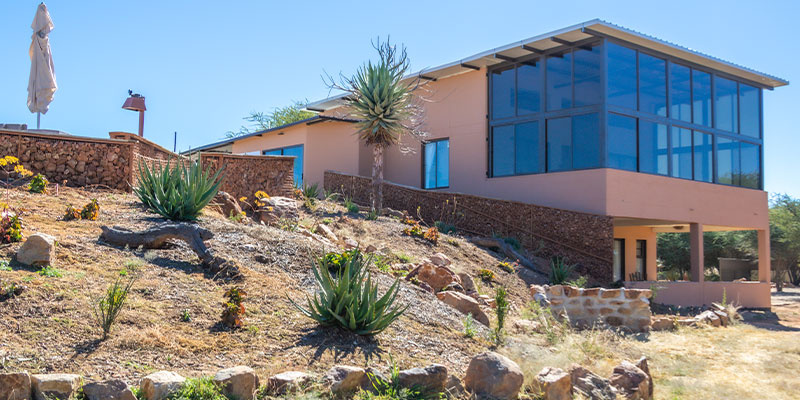
- ACK operations are based out of a home in Nairobi, with utilities including electricity, hot water and gas.
- Separate male and female rooms with bathroom facilities. Facilities are dormitory style; you will be sharing living and sleeping space with others.
- Bedding is supplied (mosquito netting, pillow, sheet, blanket and mattress,). Bathroom linens including bath towel and face cloth provided.
- There are pet cats and a dog living at the house, if you have severe animal allergies, discuss with ACK.
- Fieldwork often requires camping. If you are not able to bring your own tent, sleeping bag and pad please let ACK know in advance.
- Laundry service is done as a group, therefore it is recommended to mark clothes with a marker to prevent clothing mix-ups.
- Meals are typically prepared by everyone and eaten together (no house staff). Be prepared to cook a full meal for a large group of people.
- Food availability is similar to the US/UK.
- Meal schedules are variable in the field. We are often on the road for several hours at a time. If you have specific dietary requirements/needs it is your responsibility to make sure they are addressed.
- Toiletries and basic personal supplies are available in stores if needed.
DOCUMENTS AND MONEY
- A Passport is required (keep a separate photocopy of your passport at home and another in your suitcase).
- Keep separate copy of airline tickets in suitcase, money belt or alternate location.
- Tourist Visas are required. You can either get a three-month tourist visa upon arrival at Kenyatta Airport, or obtain one in advance through the Kenyan Embassy. When you arrive at the airport and do not have a visa you will need to fill out a visa application, available next to visa counter. You will need US $50 in exact change. Make sure to stand in VISA line for processing. If you go through the embassy, please allow enough time for the appropriate processing of paperwork. Check the embassy requirements and reports on the Internet.
- Copies of bankcard information, travelers checks, drivers license, yellow card, emergency contact, insurance, etc. should be left at home and in another location of your baggage.
- Additional paperwork is required for volunteers staying longer than three (3) months. Kenya restricts straight passport entrances to 90 days per year. Depending on your project duration, paperwork can be mailed to you, or in many cases extensions can be applied for, once in Kenya. Talk with ACK before your arrival.
- Keep with you your yellow health card (vaccination record obtained from doctor or county health dept.) as volunteer work may require travel into other countries requiring proof of Yellow Fever vaccination.
- If you will be driving you will need an International Driving License. (Check your local AAA office.)
- US money and Travelers Checks can be exchanged at banks in Nairobi and in most other cities, but you should exchange about US$200 at the airport exchange teller (for hotel, bus and other immediate expenses). Traveler""®s checks not recommended as only means of money, as exchange rates are often less, and there are often difficulties with exchanging them. You will be responsible for your own snacks, sweets and soda/beer, plan on spending US$15- 25 per week.
- Most large establishments in Nairobi accept VISA credit cards and they can also be used to obtain cash at a bank or automatic teller machines. However, many smaller shops do not accept credit cards or traveler""®s checks, so outside Nairobi it is best to carry some cash.
MEDICAL
- Speak with your doctor and/or health department about current requirements and recommendations for Kenya.
- Malaria medication is your personal choice and is recommended in Kenya. Speak to your doctor and health official about this as well. We are not in a high-risk area, but it is a good idea if you plan to travel. It is recommended that you begin taking malaria medication prior to arrival in Kenya.
- Bring enough of any medications you need to last your entire trip and a copy of your prescriptions with the generic name. It is also recommended that you bring two courses of antibiotic that you can take in case you do get sick """ please discuss it with your doctor prior to departure.
- A good reference guide is Lonely Planet's “Healthy Travel in Africa.”
INSURANCE
- Be sure to look into international health insurance coverage (through your current plan or with supplemental insurance).
- You may want to purchase medical transportation insurance, or emergency evacuation insurance in case of emergency. Check with your travel agent or insurance company for options.
Include this as a separate letter---signed and scanned and e-mail. A waiver of liability will be sent you to sign and return to us, when you have paid the final deposit of your volunteer fee….two months prior to arrival.
LUGGAGE
- Check with your airline for restrictions, each airline has it""®s own baggage weight restriction and limit to the number of bags permitted.
- It is best to use luggage and not boxes.
- At this stage in the project, extensive field research is required. Therefore, it is recommended that you bring basic camping gear including: a sleeping bag, tent, flashlight (spare batteries), and day pack. Other useful items include a water bottle or canteen, insect repellant, and a thermarest pad for sleeping. Power Bars or other nutritional bars are also good to have as we do skip meals on long cross-country trips. Check with PI before departure to confirm what equipment you will need to bring.
- We may ask you to bring additional items, but will let you know closer to your departure date.
CLIMATE AND CLOTHING
- March through early June = The Long Rains
- October to end of November = The Short Rains
- December through March = Summer.
- Late June through October = Winter.
- Temperatures range from a low of 14-18 degrees C i to 30-34 degrees C .
- Bring sunscreen as the sun is strong at any time of the year.
- During the winter, a rain jacket is recommended. When we do nighttime game counts, it gets chilly, so you may also want to bring a hat, gloves and warm fleece.
- The rest of the time, summer clothes are fine during daylight hours. And a pair of long trousers, fleece, and light jacket are useful for cool nights. Tank tops are fine for work at the house. Be considerate of local customs of modesty, visits to town and field interviews button down or elbow length tops may be required and skirt or pant.
- Laundry services are available.
GENERAL NEEDS
Packing list expanded include camp gear
- Flashlight and batteries
- Binoculars
- Alarm clock
- Hiking boots or tall-topped tennis shoes.
- Camera and film (film available here, but more costly)
- Rubber-soled, strap-on sandals (in warmer months).
- Flip-flops.
- Fleece jacket, sweatshirt and warm hat, evenings can become chilly esp. in winter months.
- First Aid Kit.
- Mosquito repellant.
- UV protected sunglasses, bring spare pair.
- Hat for sun protection
- Swimsuit
- Day Pack and/or bag for 3-5 day of clothes for field work.
- USB or jump disk to transport electronic data. · Optional: GSM Tri-Band Cell Phone (you can buy phone cards here in Kenya) """ reception may be limited. OR Inmarsat Satellite Phone (available to rent through companies listed on the Internet for approx. $50 a week plus phone charges) """ offers reception virtually anywhere in Kenya. If you decide to bring a phone, you should research it well, as there are a number of companies offering a variety of different services.
Recharging batteries or use of electronic equipment is available when at the house. If you plan to use bring a power converter (220V in Kenya) and outlet adapter.
CORRESPONDENCE
During your stay at CCF, you may receive mail at the following address:
c/o ACK
PO Box 1611
00606, Nairobi, Kenya
TEL: +254 (0)733 997910
You may send and receive limited amounts of e-mail at the following address; attachments or forwards are not permitted unless pertaining to official ACK work. Senders are required to add your name in the subject line of the e-mail. Our e-mail address is cheetah@africaonline.co.ke
Internet cafes are available in Nairobi.
If you desire regular communication, it is possible to rent cellular service through ACK.